When Should We Let Flowers in a Vase Go?
This is a topic I hesitated to write about, not because it is difficult, but because it is quietly emotional. When we arrange flowers, especially when we choose them carefully and place them with intention, it feels wasteful to throw them away. We tell ourselves they are still beautiful enough, still holding on, still trying….
This is a topic I hesitated to write about, not because it is difficult, but because it is quietly emotional.
When we arrange flowers, especially when we choose them carefully and place them with intention, it feels wasteful to throw them away. We tell ourselves they are still beautiful enough, still holding on, still trying.
For a long time, I kept flowers far past the moment they should have left the vase. I trimmed stems again and again, changed water more often than necessary, and convinced myself that one more day would not hurt.
Gradually, I learned that keeping flowers too long does not honor them. It drains the room, affects the air, and often harms the flowers that are still healthy in the arrangement.
The Water Always Speaks First
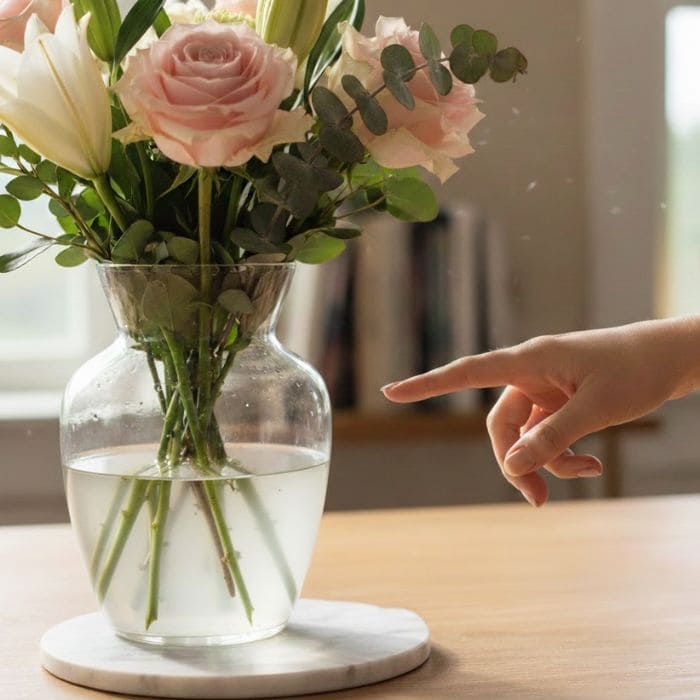
Before I look at petals, I always look at water. Healthy vase water remains clear for at least two days after a change. It may lose a little brightness, but it should not cloud quickly.
When water turns milky or gray within twenty-four hours, something inside the vase is already breaking down.
Smell is the second warning. Fresh water has no smell at all. When I lean close to a vase and notice a sour, metallic, or slightly rotten odor, I don’t argue with it.
That smell comes from bacteria feeding on decaying plant tissue. At that point, the flowers are no longer coexisting peacefully with the water.
Changing water repeatedly will not solve this as bacteria have already colonized the stems themselves.
The Truth Is in the Stems, Not the Blooms
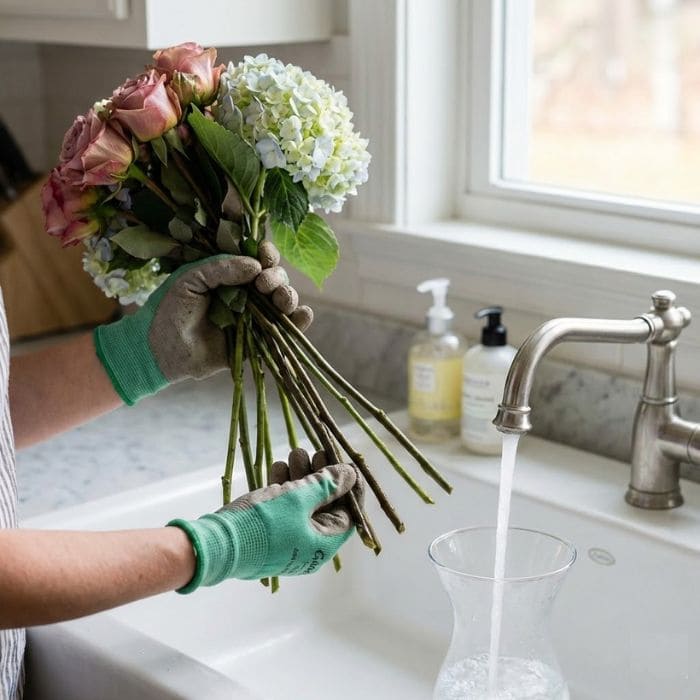
Many people wait until petals fall, but petals are often the last to admit defeat. Stems tell the truth much earlier.
Healthy stems feel cool, solid, and slightly elastic. When I gently pinch near the base, there is resistance.
When stems begin to feel soft, hollow, or slippery, especially near the waterline, that flower is no longer able to transport water properly.
This is especially common with roses, hydrangeas, garden roses, and tulips.
Once one stem turns slimy, it begins releasing bacteria into the water immediately. If left untouched, it shortens the life of every other flower sharing that vase.
If I catch it early, I remove the single stem and rinse the vase thoroughly. If multiple stems feel compromised, the arrangement has reached its end.
Petals Don’t Need to Fall to Be Finished
Many people wait until petals fall before throwing flowers away. I used to do that too, but now I know better.
Flowers can be visually intact while already exhausted. Petals that lose their natural tension, feel papery instead of smooth, or curl inward without opening further are no longer living fully. They are holding shape, not vitality.
Another sign I watch for is uneven aging. When one bloom collapses while others remain tight and stressed, it usually means the arrangement is fighting itself. Keeping it longer will not restore balance.
When Wilting Flowers Start Attracting Pests, It’s Already Too Late
The signs I mentioned above often appear quietly at first. But if those early signs are ignored for too long, this begins to happen: pests start to appear.
As flowers decay, they release compounds including sulfur-based compounds, amines, and ethylene into the air and water that are extremely attractive to small insects.
The combination of decomposing plant matter, high humidity inside the vase, and stagnant water creates a perfect environment for fruit flies, fungus gnats, and other tiny pests.
Once bacteria multiply and fungal growth begins at the base of the stems, the scent changes. It may still be subtle to us, but insects detect it immediately.
You might notice a few small flies hovering near the vase, especially in warmer rooms or kitchens. Sometimes they appear suddenly, even if the rest of the house feels clean.
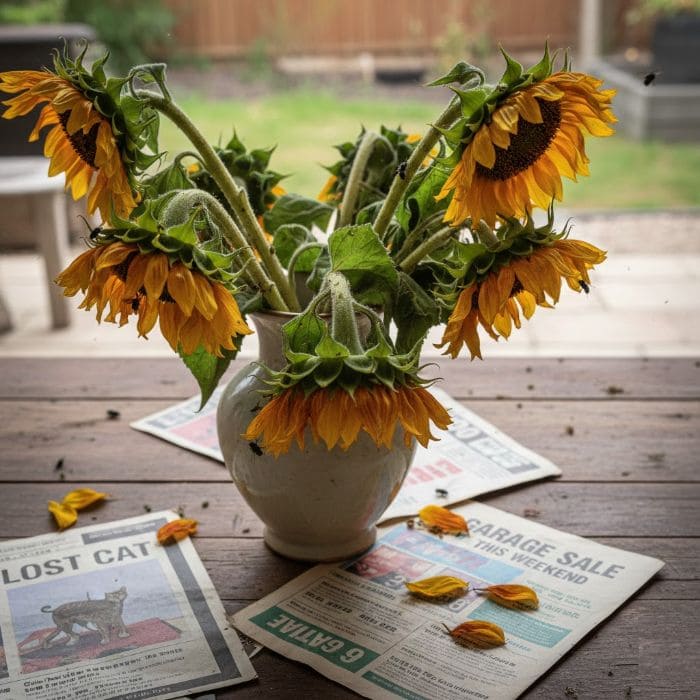
At this stage, changing the water is no longer enough. The stems are already compromised, and the surrounding environment has shifted from fresh to decaying.
Leaving the flowers in place allows pests to multiply and encourages mold and fungal spores to spread, which can affect nearby surfaces, furniture, and even other plants in the room.
So, removing them promptly protects the air, the space, and the flowers that are still healthy elsewhere in the house.
And that is why I now act at the earlier signs, long before insects arrive to make the choice for me.
The Day Count That Helps Me Decide
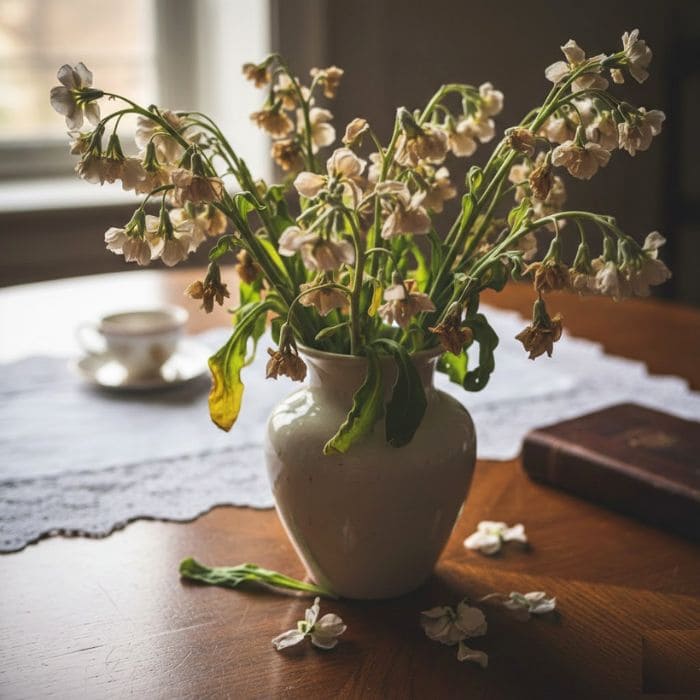
I don’t believe in strict rules, but experience has given me a general timeline that helps me avoid second-guessing.
Most mixed arrangements, even with good care, reach their natural end between five and seven days.
Delicate flowers like tulips, stock, and eustoma often signal decline earlier. Hardier flowers like carnations or baby’s breath may last longer, but only if they are not sharing space with decaying stems.
If an arrangement reaches day seven and begins to require constant intervention, trimming, refreshing, rearranging, that is my cue. Flowers should bring ease, not obligation.
When Part of the Arrangement Can Still Be Saved
Sometimes, not everything needs to go. If one or two stems remain firm and fresh while others decline, I separate them.
I rinse the vase thoroughly, prepare fresh water, and give the remaining flowers a clean start in a smaller container. This works well for eucalyptus, baby’s breath, carnations, and some roses.
What I never do is try to save flowers by mixing them with new ones. Old stems introduce bacteria immediately and shorten the life of anything fresh added to the vase.
Why Letting Go Is Part of Flower Care
Throwing away flowers does not mean failure. Old flowers affect the atmosphere of a room more than we realize.
They hold stagnant water, release odor, and subtly drain the space of freshness. Once they are gone, the room breathes again.
I’ve noticed that clearing an old arrangement often feels like resetting the house. Sometimes, I keep one bloom aside for a few hours, just to say goodbye properly, then I let it go.