The Vase That Slipped Out of My Hand
Oops. That was the first thing I said, even though my heart dropped the second I heard the sound. Yesterday I was preparing a vase to display in the living room, already picturing garden roses opening slowly inside it, when I made a careless decision that lasted only a few seconds and changed the rest…
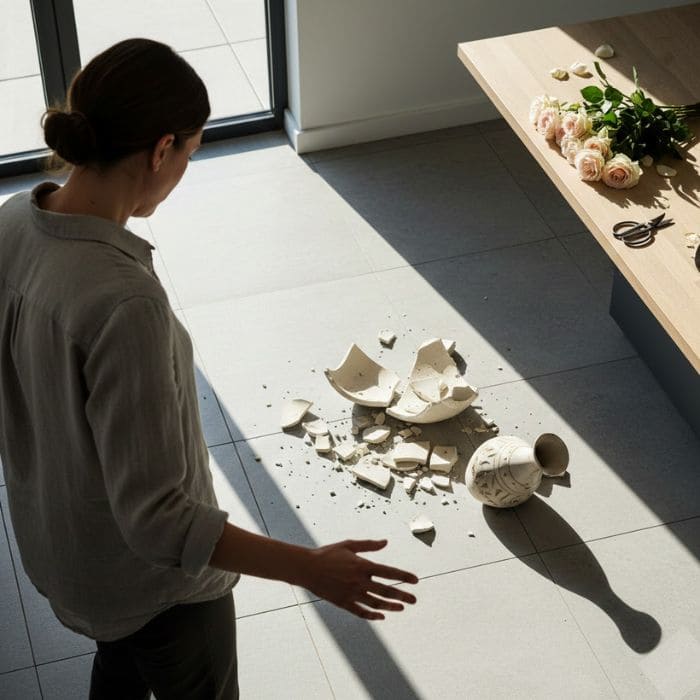
Oops. That was the first thing I said, even though my heart dropped the second I heard the sound.
Yesterday I was preparing a vase to display in the living room, already picturing garden roses opening slowly inside it, when I made a careless decision that lasted only a few seconds and changed the rest of the day.
I brought the vase into the kitchen because it is always easier for me to work there. The counter is wide, the light is clean, and I can move freely without bumping into furniture.
I placed the vase near the edge of the table, not hanging over, just close enough that it felt convenient while I arranged stems. I told myself I would only need one more thing.
I turned to look for scissors. When I reached back with my left hand, without looking, my fingers brushed the side of the vase. It shifted instantly, lost its balance, and fell.
The sound was sharp and unmistakable. A clear crack followed by a scattered clatter as ceramic hit tile.
Why This Vase Mattered So Much
This was not an ordinary vase in my house, I bought it at a local market in Mount Dora. The man who sold it to me explained that it had been made by a Japanese ceramic artist who worked in small batches rather than mass production.
The vase stood about 30 centimeters tall, with a narrow neck that gently widened into a rounded body. The clay was warm and off-white, not glossy, but softly matte, with tiny speckles visible when light hit the surface at an angle.
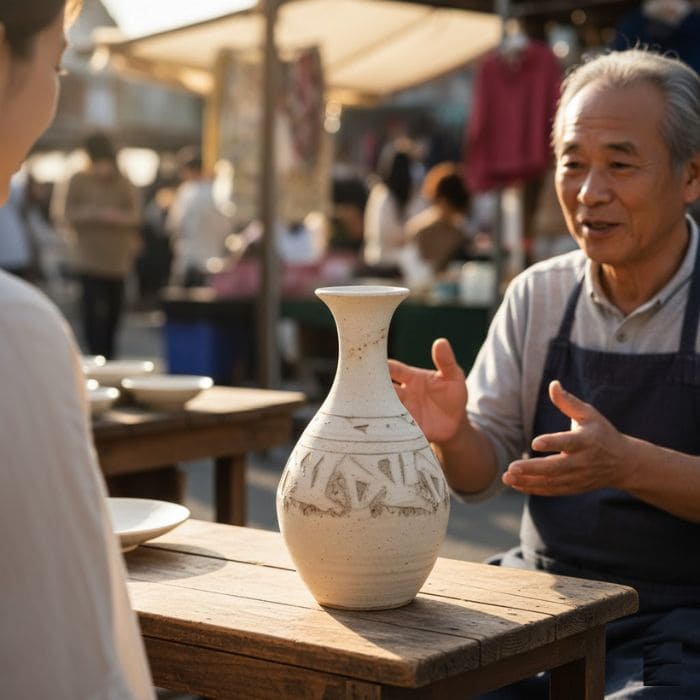
Around the body were faint carved lines, not perfectly symmetrical, running in loose horizontal rhythms, the kind you only notice when you hold the piece in your hands rather than glance at it from across a room.
The glaze was uneven in a way that felt intentional, slightly thicker near the rim and thinner toward the base, allowing the clay beneath to show through.
The seller told me it had been fired using traditional methods, which explained why the surface felt alive rather than sealed.
He also mentioned it was made several decades ago, not officially antique, but old enough to carry time within it. That history was reflected in the price, which was higher than most of the vases I own.
Because of that, I treated it carefully. I usually stored it wrapped in cloth inside a large drawer in my bedroom, taking it out only when I felt a specific arrangement deserved it. Yesterday, I thought garden roses deserved it.
Gathering the Pieces
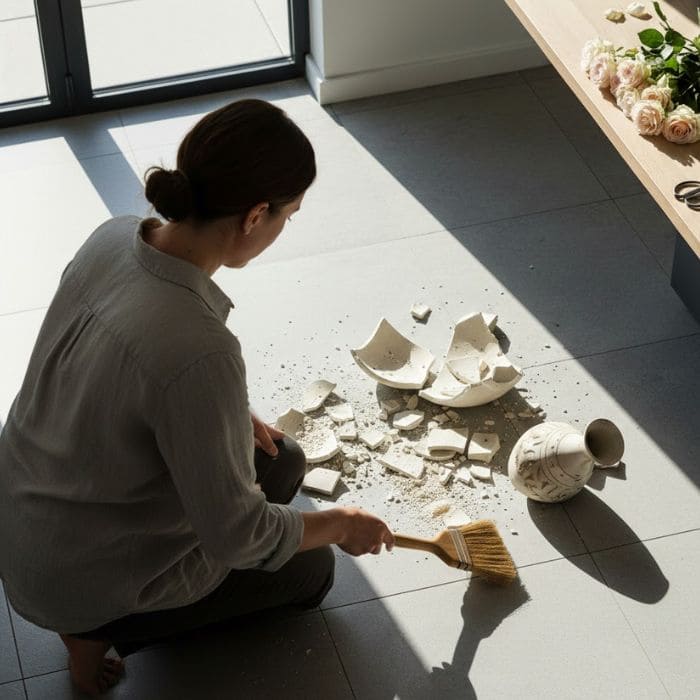
I knelt on the kitchen floor and picked up the pieces one by one. The vase had broken into several large shards rather than shattering completely, which somehow made it harder to accept.
Each piece still carried the curve of the original form. The rim had split cleanly in two. The base remained intact. It felt wrong to imagine throwing them into the trash.
I swept the smallest fragments first, then laid the larger pieces gently on the counter, arranging them almost instinctively as if I were already thinking about how they might fit back together.
Why I Could Not Throw It Away
I felt how wasteful it would be to throw it away. This vase had been chosen carefully, appreciated quietly, and protected intentionally.
That was when I remembered something I had read years ago but never practiced. The Japanese repair method known as kintsugi treats breakage as part of an object’s history rather than something to hide.
Cracks are repaired and highlighted, often with metallic powder, turning damage into a visible record rather than a flaw.
Preparing to Repair
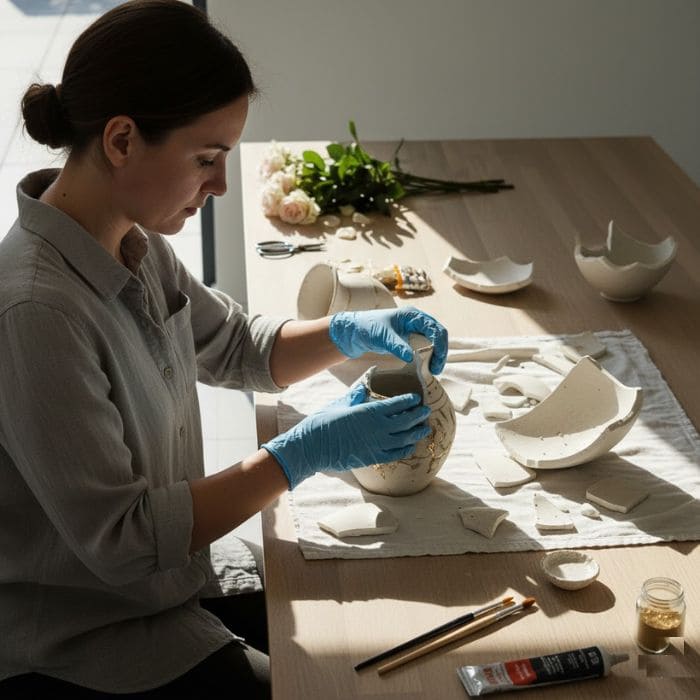
I gathered everything slowly: a strong ceramic adhesive, fine brushes, gold-colored repair powder, gloves, a clean cloth.
Before using any glue, I dry-fitted every piece, matching edges carefully and memorizing how they belonged together.
This step took longer than I expected, but it mattered. It forced me to slow down and understand how the vase had originally been constructed.
Repairing the Vase, One Section at a Time
I worked in small sections, applying adhesive to one edge at a time and pressing pieces together gently, holding them until they could support themselves.
I did not try to rebuild the entire vase at once. I allowed each section to set before moving on, which kept the structure stable and prevented shifting.
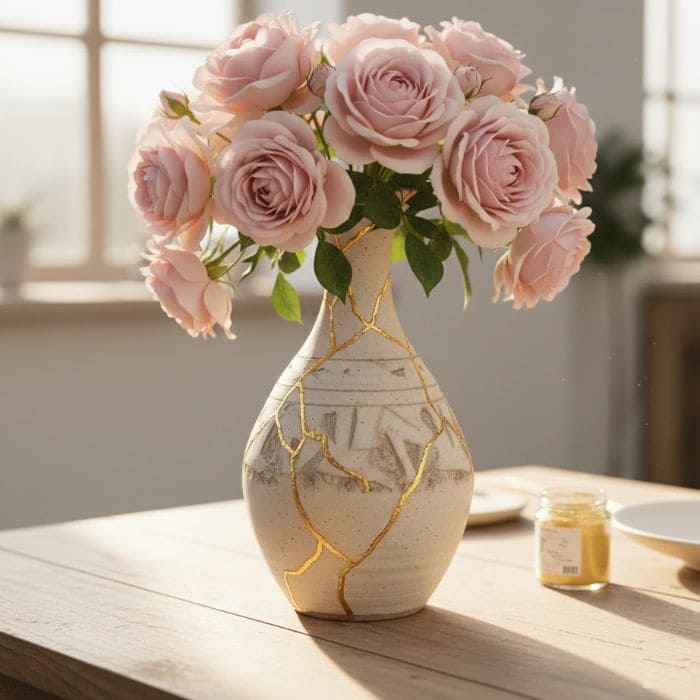
Once the vase was whole again, though visibly cracked, I mixed the gold powder with a small amount of adhesive and traced the fracture lines carefully.
I followed the cracks exactly as they ran, resisting the urge to straighten or minimize them. The lines were irregular, organic, and honest.
The process took hours because it demanded attention and patience.
When I finally stepped back, the vase was no longer what it had been before. The cracks were visible, catching light softly against the muted ceramic surface.
The gold lines marked where the vase had been broken and how it had been cared for afterward.