Never Mix Anemones With Chrysanthemums in One Vase
I wish I had read this somewhere before, I really do. But some lessons insist on being lived first, and this one arrived quietly, wrapped in flowers I could not resist. Two weeks ago, I visited Jennifer’s shop the way I usually do. The moment I stepped inside, anemones stopped me almost immediately. The Anemones…
I wish I had read this somewhere before, I really do. But some lessons insist on being lived first, and this one arrived quietly, wrapped in flowers I could not resist.
Two weeks ago, I visited Jennifer’s shop the way I usually do. The moment I stepped inside, anemones stopped me almost immediately.
The Anemones I Had Never Taken Home Before
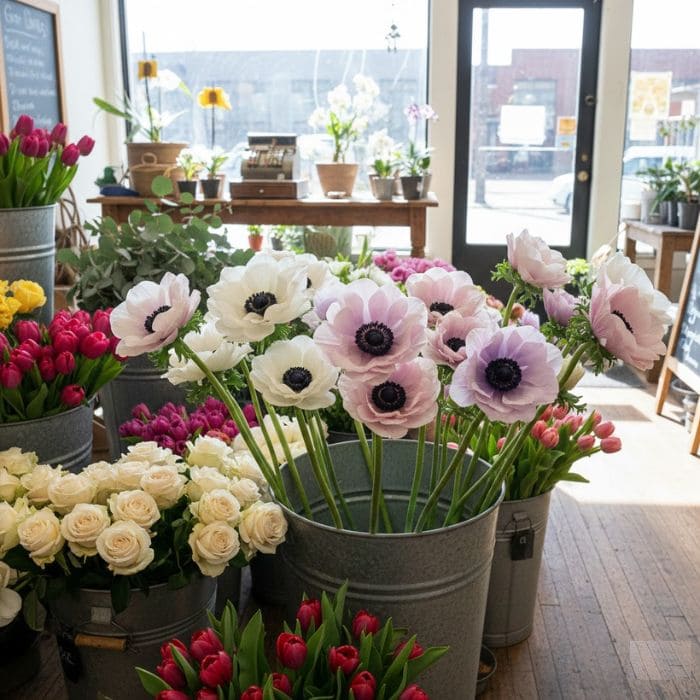
I had never bought anemones before, and standing there, I realized how strange that was.
I had seen them in photos, of course, styled perfectly, often looking dramatic and editorial, but seeing them in person was different.
The blooms were larger than I expected, each one easily the size of my palm, with petals that looked smooth and deliberate, almost like fabric rather than something grown.
What drew me in most were the centers. Deep black, slightly raised, textured, pulling your gaze inward without apology.
Some of the anemones were crisp white, others leaned toward blush or soft lavender, but all of them carried that same bold center, creating a contrast that felt graphic and modern.
Their stems were long and straight, not delicate in the way I imagined. They stood upright, confident, as if they knew exactly how much attention they deserved.
I thought that they didn’t look like flowers meant to fade quietly. They looked like flowers that expected to be noticed.
Jennifer mentioned, almost in passing, that anemones were sensitive and preferred clean water and gentle handling. I nodded, but I was already holding them.
The Chrysanthemums That Made Me Change My Plan
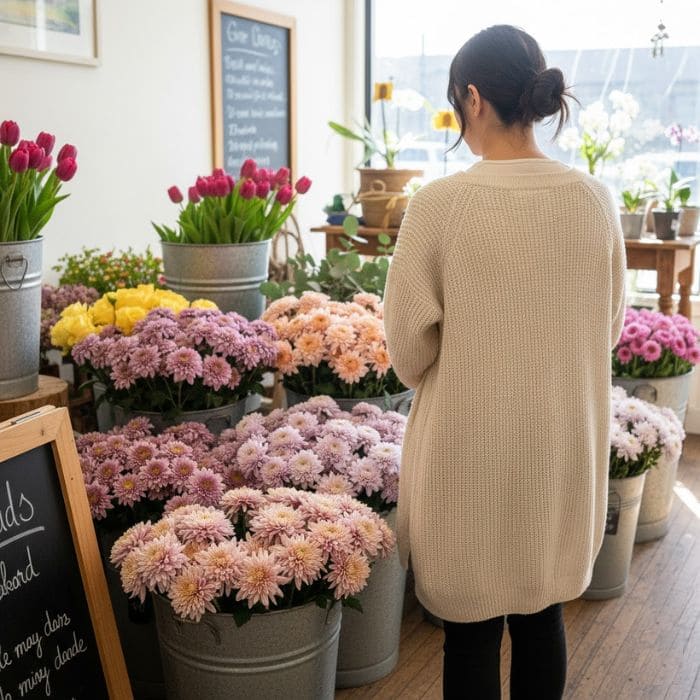
Just a few steps deeper into the shop, I noticed the chrysanthemums, and that’s where the story quietly shifted.
Usually, when I see chrysanthemums, they are familiar and predictable, mostly yellow or white, dependable and steady. This time, the selection felt completely different.
There were chrysanthemums in muted pink, dusty purple, soft peach, and pale lavender. The blooms were full and layered, dense with petals, giving them a comforting weight.
Chrysanthemums have always felt practical to me as they last, tolerate changes in water and temperature, and in reality, they don’t collapse easily.
Standing there, I thought pairing them with anemones might create balance. The drama of anemones softened by the reliability of chrysanthemums.
It felt logical. So I bought both.
The Arrangement That Looked Right at First Glance
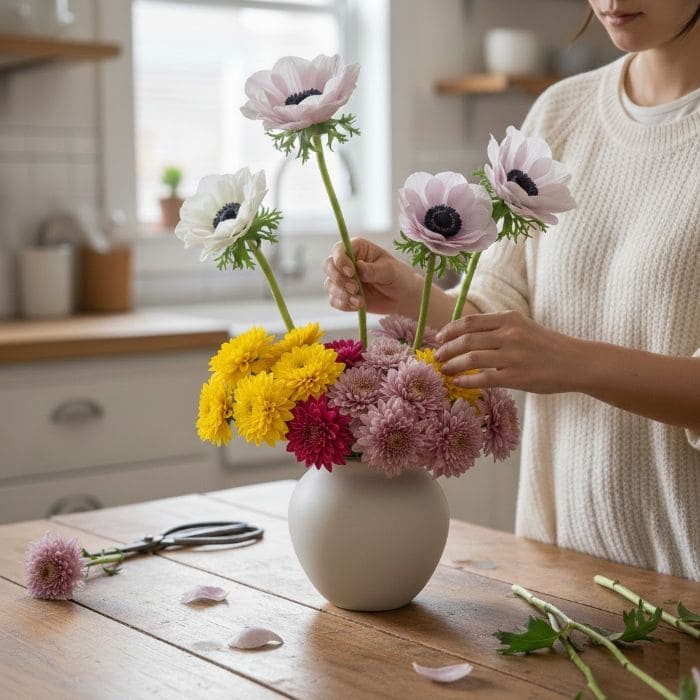
At home, I cleaned a medium-height ceramic vase carefully, filled it with fresh water, and re-cut all the stems at sharp angles.
I arranged the chrysanthemums first, letting them form a rounded, generous base that filled the vase comfortably.
Then I added the anemones, placing them slightly higher, allowing their dark centers to rise above the softer colors below.
Visually, the arrangement worked. The contrast was striking. The anemones commanded attention, while the chrysanthemums grounded the composition.
I stepped back, adjusted a stem or two, and felt satisfied in that quiet way that tells you an arrangement feels finished.
I even took photos and shared them online, proud of how balanced it looked.
The First Signs I Almost Ignored
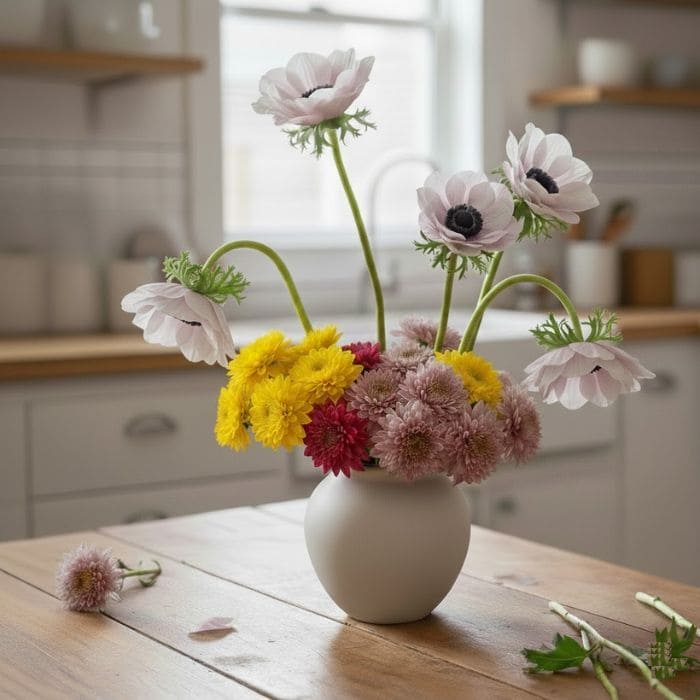
The first thing that felt off wasn’t dramatic. The water looked slightly cloudy sooner than I expected.
By the next morning, the anemone petals seemed just a bit less firm at the edges, while the chrysanthemums looked exactly the same as the day before.
By the second day, the difference was undeniable. The anemones began to droop, their once-upright stems bending subtly, their petals losing tension and curling inward.
Meanwhile, the chrysanthemums remained full, structured, and unaffected, as if they were thriving in conditions that were clearly stressing their companions.
It felt uncomfortable to look at them together, one flower visibly declining while the other stood unchanged.
I changed the water completely, re-cut the stems, and moved the vase to a quieter, cooler spot. None of it helped.
Asking Questions and Hearing the Truth
Confused, I posted a photo and asked for advice. Most responses were general, suggesting water changes or placement adjustments. Then Annie commented.
She said, “Anemones and chrysanthemums don’t like each other. They shouldn’t share a vase.”
Later, when I brought it up to Jennifer, she confirmed it calmly, without surprise. Chrysanthemums release natural compounds into the water that help inhibit bacteria and extend their own vase life.
That’s one reason they last so long. Unfortunately, those same compounds can stress more sensitive flowers like anemones, disrupting their ability to absorb water properly.
Anemones need clean, quiet water and gentle conditions, while chrysanthemums dominate their environment without meaning to.
What This Vase Taught Me
This experience changed how I think about flower combinations. Some flowers don’t argue loudly when paired incorrectly, they simply fail quietly.
Anemones are better alone or paired with equally gentle companions. Chrysanthemums are strong and generous, but they need partners that can handle their presence.
I would still buy both flowers again, I just wouldn’t ask them to share the same space.