How to Create Unique Flower Colors from Florists
There was a time when I would stop in front of certain flowers and feel slightly intimidated by them. Deep black roses arranged perfectly in a vase. Dusty lavender hydrangeas with an even, unreal tone. Blue roses were so saturated they looked like they belonged in a painting rather than a garden. Every time I…
There was a time when I would stop in front of certain flowers and feel slightly intimidated by them.
Deep black roses arranged perfectly in a vase. Dusty lavender hydrangeas with an even, unreal tone. Blue roses were so saturated they looked like they belonged in a painting rather than a garden.
Every time I saw them, especially online or in florist displays, I assumed the same thing. These flowers must be imported, or belong to rare varieties. That must be why they cost so much.
What Jennifer Finally Told Me
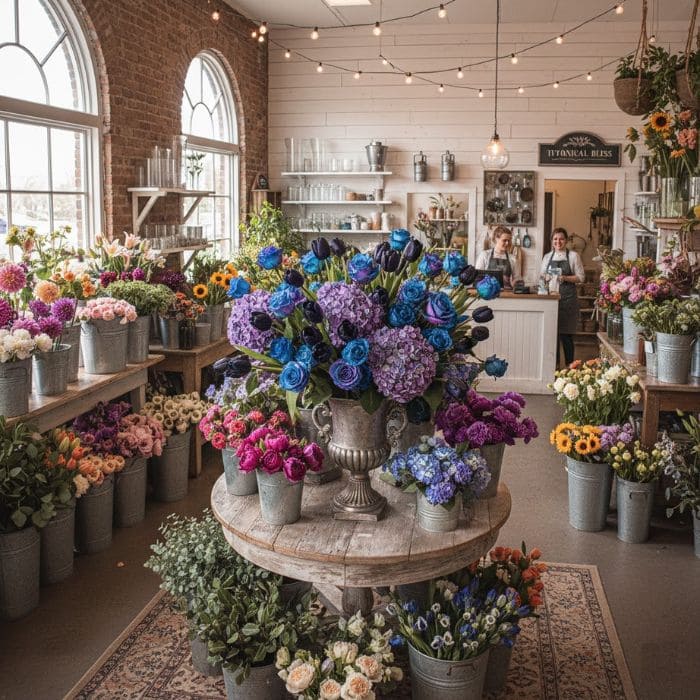
One afternoon in Jennifer, I was admiring a display of flowers that looked almost too perfect. The colors were striking, saturated in a way nature rarely repeats exactly. I commented on how beautiful and unusual they were, and asked where they came from.
Jennifer didn’t answer immediately. She adjusted a bucket, wiped her hands on a cloth, and then said, very casually, “Most of those are sprayed.”
She explained that florists often use floral spray paint to achieve colors that don’t exist naturally or to intensify tones that would otherwise be uneven.
It is common practice for weddings, events, window displays, and photography. Most customers never ask, and many wouldn’t want to know.
Once You Know, You See It Everywhere
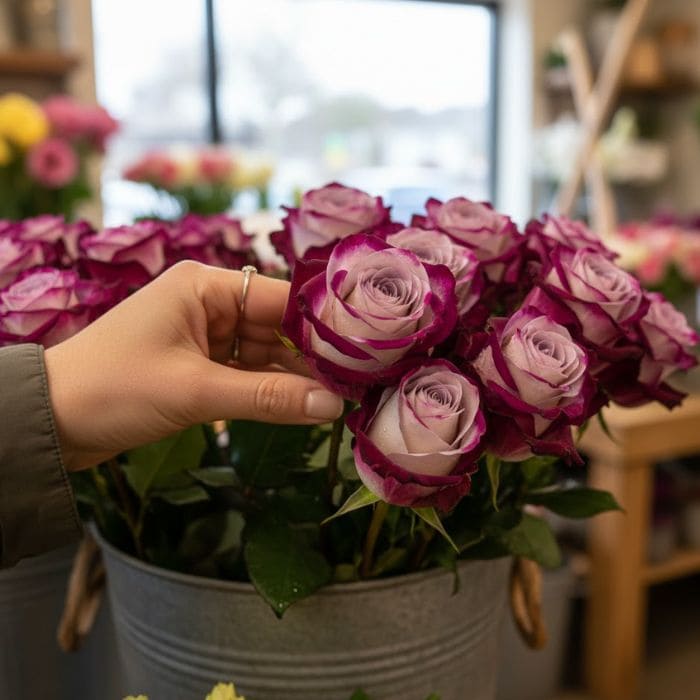
After that conversation, I started recognizing sprayed flowers immediately.
Roses with color that sits only on the outer petals. Hydrangeas where the petals feel slightly stiff. Flowers that look perfect from a distance but oddly uniform up close.
Common examples include blue roses, jet-black roses, gold-dusted orchids, pastel-tinted baby’s breath, and sometimes even eucalyptus sprayed silver or white.
These flowers are photographed beautifully. That is why they appear everywhere online.
My Curiosity Turned Into Experimentation
Of course, once I understood what was happening, I wanted to try it myself.
I bought a floral spray paint used by florists, specifically Design Master spray paint. I am not advertising it. I mention it because it is important to use a product made for flowers, not regular craft or hardware paint.
Floral sprays are finer, lighter, and designed to dry quickly without completely sealing the petals.
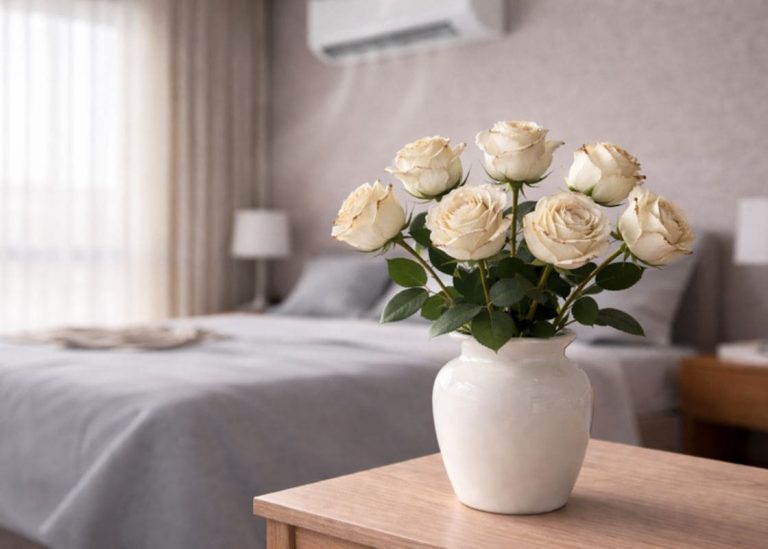
My first experiment was intentionally simple. I chose white roses as white flowers accept color most evenly and show mistakes clearly, which makes them the best teachers.
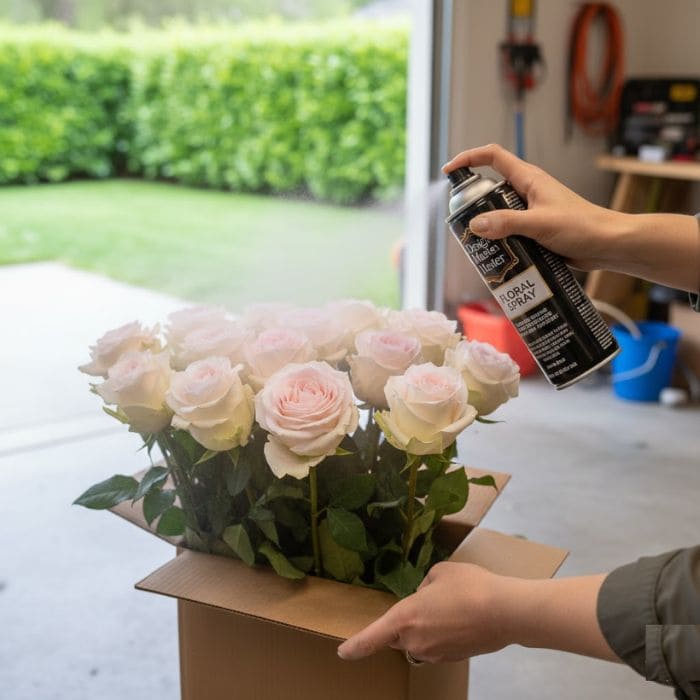
I never spray flowers indoors; always outside, or in a very open garage with airflow. I place the flowers upright in a box or bucket to protect surrounding surfaces.
I shake the can thoroughly and hold it about 30 to 40 centimeters away from the flowers. Then I use short, light bursts, moving constantly.
I never aim for full coverage. The goal is tinting, not coating.
I let the flowers dry completely before touching them or bringing them inside. This usually takes about fifteen to twenty minutes, depending on humidity.
Flowers That Accept Spray Gracefully
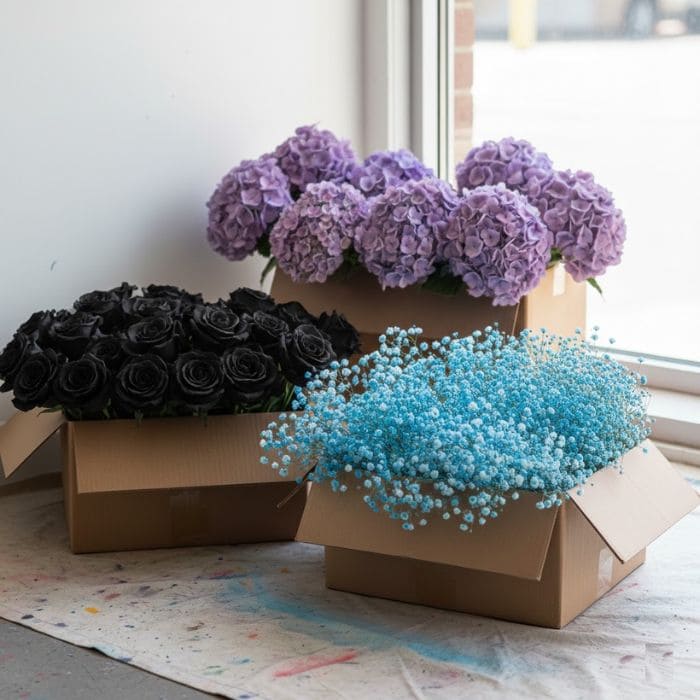
Through trial, I learned that some flowers handle spray far better than others.
Roses are the most forgiving. Their petals are thick enough to hold light spray without collapsing. Carnations behave similarly.
The baby’s breath takes color beautifully, especially soft pastels. Chrysanthemums also respond well, holding shape and color evenly.
Hydrangeas can handle very light tinting, but heavy spray causes them to dry out faster than usual.
Delicate flowers like ranunculus, poppies, and sweet peas suffer quickly. Their petals are too thin, and spray weighs them down.
Also, greenery is where spray paint truly shines. Eucalyptus, ruscus, and fern take metallic or muted tones extremely well, which explains why silver and gold foliage appear so often in modern arrangements.
When I Started Copying Nature Instead of Inventing It
Here is the part that surprised me most, I stopped inventing colors and started copying real ones.
Sometimes I search online for rare or naturally occurring flower colors, deep plum roses, nearly black tulips, smoky mauve peonies. Then I choose the closest real color and recreate it using spray on white flowers.
The first time I finished and stepped back, I said out loud, “Oh my God, I actually made a black rose.” It looked expensive and exotic.
Important Notes About Longevity and Safety
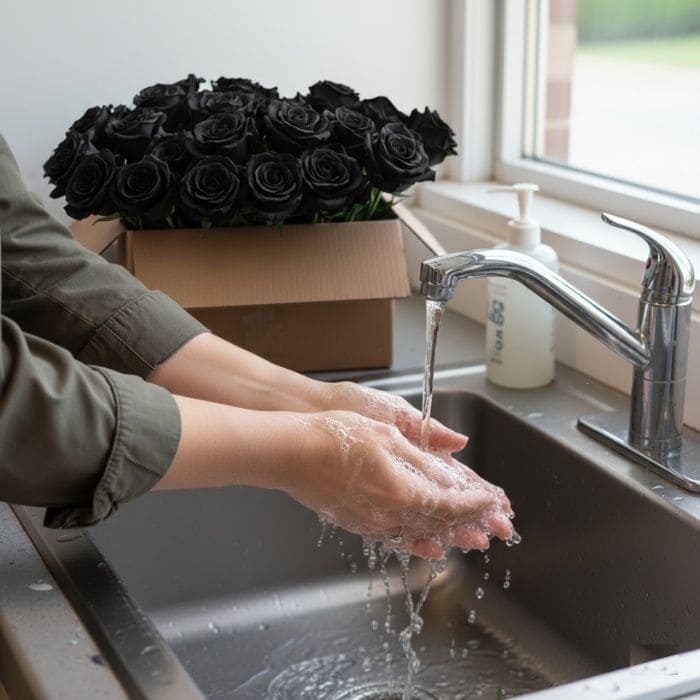
Spray paint shortens a flower’s life. There is no way around that. It interferes with how petals release moisture and breathe. Sprayed flowers are meant for visual impact, not longevity.
I never use sprayed flowers near food, never place them in bedrooms, and never let my son touch them.
Even though floral spray paints are labeled non-toxic once dry, they are still chemicals. I wash my hands after handling sprayed flowers and keep them in well-ventilated areas.
I also never spray flowers I want to keep for a long time. This technique is for moments, not for weeks.
I’m Glad I Know This Now
Knowing this changed how I see flowers. I no longer assume every exotic color is rare. And I no longer dismiss sprayed flowers as artificial either.
Most days, I still choose natural flowers, uneven tones, fading petals, and honest aging. But sometimes, when I want a specific mood or color, I use spray thoughtfully and intentionally.