How I Enlarged Garden Roses Successfully
Hello, Melissa Grant again. I still smile when I write that. Sometimes I hear my own voice in my head and think I sound like a blogger, sometimes like someone talking to herself while arranging flowers at the kitchen table. I am not entirely sure which one I am yet, but I do know this…
Hello, Melissa Grant again. I still smile when I write that.
Sometimes I hear my own voice in my head and think I sound like a blogger, sometimes like someone talking to herself while arranging flowers at the kitchen table.
I am not entirely sure which one I am yet, but I do know this blog to be genuinely helpful, especially for people who love flowers and roses the way I do.
Why Garden Roses Keep Pulling Me Back
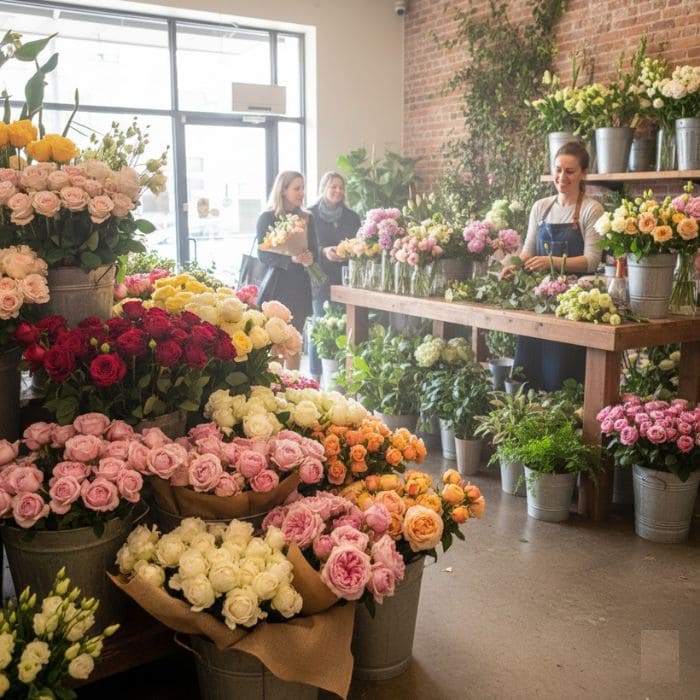
I buy garden roses more often than any other flower. Jennifer’s shop almost always has several varieties. I arrange a vase of garden roses at least once a month, sometimes twice when they are especially good.
Garden roses are different from standard roses in a way that is hard to explain until you handle them yourself. The petals are thinner and softer, layered tightly toward the center, folding inward rather than flaring outward.
When they begin to open, they form a deep cup, like a small bowl made of fabric. The bloom feels intentional, not dramatic.
The colors are complex. Cream roses often carry hints of peach or butter yellow near the center. Blush roses deepen as they open, becoming warmer instead of paler. Dusty pinks fade gently toward the outer petals.
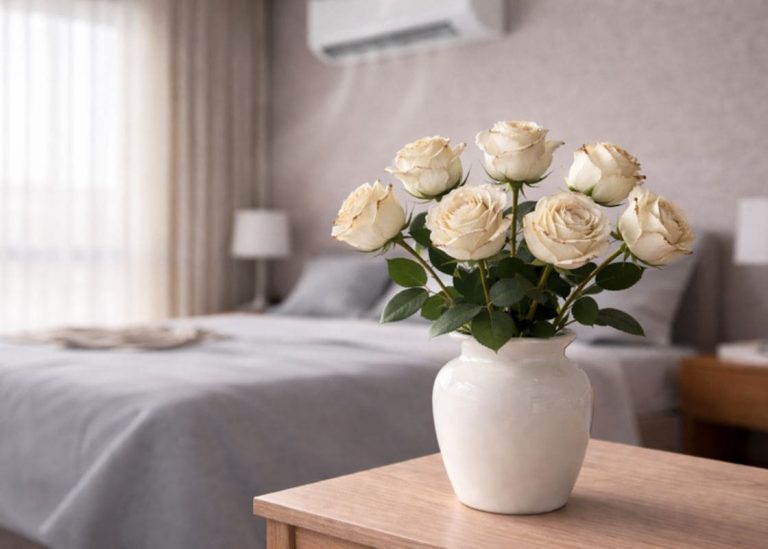
Even white garden roses are rarely pure white. They carry warmth, sometimes leaning ivory, sometimes faintly champagne.
And the scent is what keeps me loyal. Garden roses smell like roses are supposed to smell, not sharp, not sugary. The fragrance sits low in the room, noticeable without announcing itself.
The Size People Expect, and Rarely Get
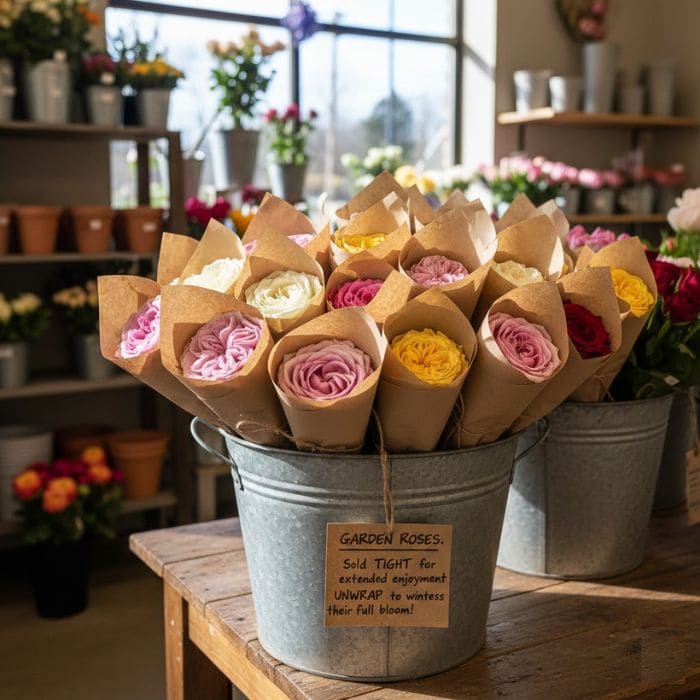
Many people buy garden roses because they hear about how large they can bloom. Advertisements promise oversized, romantic flowers. Then the roses arrive, open only partway, and stay small.
Here is the truth. Garden roses are almost always sold tight, very tight. The bloom you see when you buy them is not the bloom they are capable of. But they will only open fully if they can drink properly.
When garden roses bloom correctly, they are not subtle about it. A fully opened garden rose can reach five to six inches across. I have measured them.
When placed beside a teacup, the bloom is often wider than the rim. Compared to an apple, it can match or even exceed its width. When I place one next to my palm, the petals often extend beyond my fingers.
The First Cut Is Everything
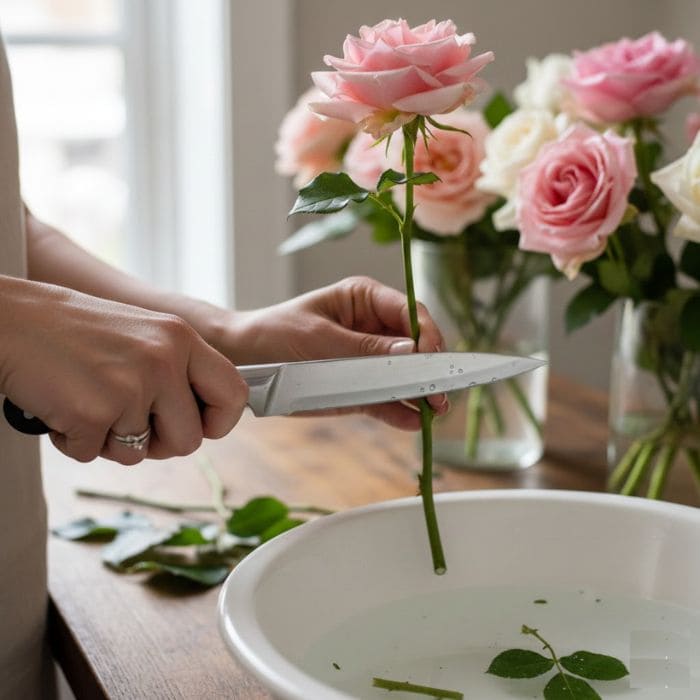
As soon as I bring garden roses home, I re-cut every stem. I do not trim, I cut.
I use a sharp knife, never scissors. Scissors crush the stem fibers even when the cut looks clean, and garden roses are too heavy and thirsty to tolerate that.
I cut at a sharp angle, at least forty-five degrees, sometimes steeper. I remove at least one full inch from the bottom of each stem. This is not optional as garden roses seal their stems quickly, and that sealed end blocks water uptake almost immediately.
That angled cut increases surface area and prevents the stem from sitting flat against the bottom of the vase, which can choke water absorption.
This step alone can determine whether your rose opens like a teacup or stays the size of a lemon.
Water Is Not a Detail, It Is the System
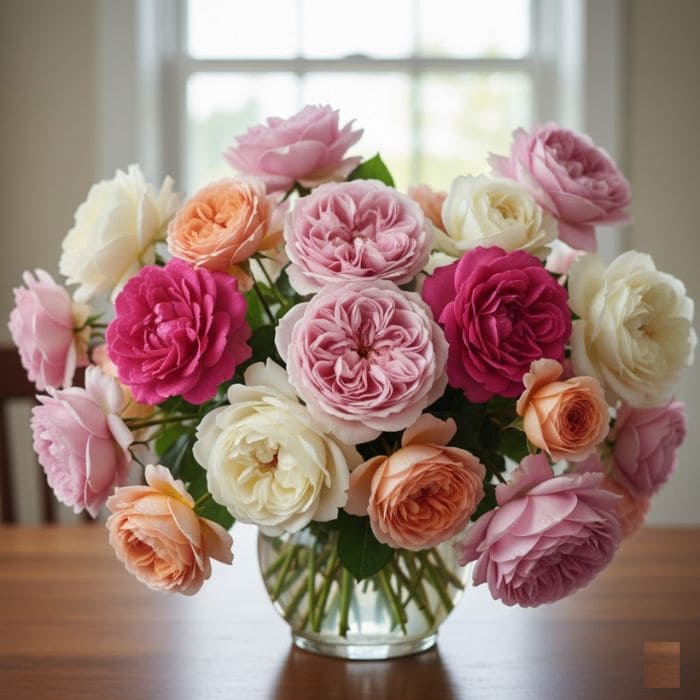
Garden roses drink aggressively, so I fill the vase higher than I would for most flowers, enough to support the weight of the bloom as it opens.
I remove every leaf that would fall below the waterline because garden roses are sensitive to bacteria, and bacteria blocks water uptake faster than anything else.
Every two days, without exception, I change the water, even if it looks clear or even if the roses still look fine.
Each time I change the water, I rinse the vase and trim a small amount off the stems again. Sometimes it is only a quarter inch, but that fresh cut reopens the pathway the rose needs.
This is where most people lose the bloom. They do everything right once, then stop. Garden roses need consistency more than care.
Watching the Bloom Transform
When garden roses are drinking properly, the change is visible. The outer petals loosen first. They soften and curve outward slightly, like fabric relaxing. The center begins to open, layer by layer, not quickly, but steadily.
As the bloom expands, the rose becomes top-heavy. This is when the stem strength matters.
If the rose was cut poorly or dehydrated early, it will bend at the neck. If it was prepared correctly, it holds itself upright, even when the bloom reaches full size.
Why Garden Roses Taught Me Patience
Garden roses respond to small, repeated actions done correctly with sharp cuts, clean water and space.
When treated well, they are generous beyond expectation. They open wider than you imagine.
So when someone tells me they bought large garden roses and felt disappointed, I never blame the flower. I ask how they cut the stems, how often they changed the water, and where they placed the vase.
Because when a garden rose opens fully, wide as a teacup and soft as fabric, you understand why people fall in love with them again and again.