Here is Exactly Fragrance in My Bedroom
I don’t use artificial fragrance in my bedroom. I say this plainly, because it surprises people when they visit my home. There are no plug-ins hidden behind furniture, no sprays tucked into drawers, no candles burning late into the night. This isn’t a rule I made because of trends or advice I read somewhere. It…
I don’t use artificial fragrance in my bedroom. I say this plainly, because it surprises people when they visit my home.
There are no plug-ins hidden behind furniture, no sprays tucked into drawers, no candles burning late into the night.
This isn’t a rule I made because of trends or advice I read somewhere. It came from noticing my own body, my own sleep, and the way scent lingers in a space meant for rest.
For me, the bedroom needs to feel neutral, breathable, and honest. I want to fall asleep without stimulation, without something constantly asking my senses to react.
Gradually, I realized that even pleasant artificial fragrances carry a sharpness, a repetition, a sameness that never truly fades. They sit in the air, unchanged, until you notice them too much.
And yet, there is one exception I allow, one presence I welcome during the day, because it behaves differently. That exception is gardenia.
Gardenia in Florida, Where It Feels Naturally Rooted
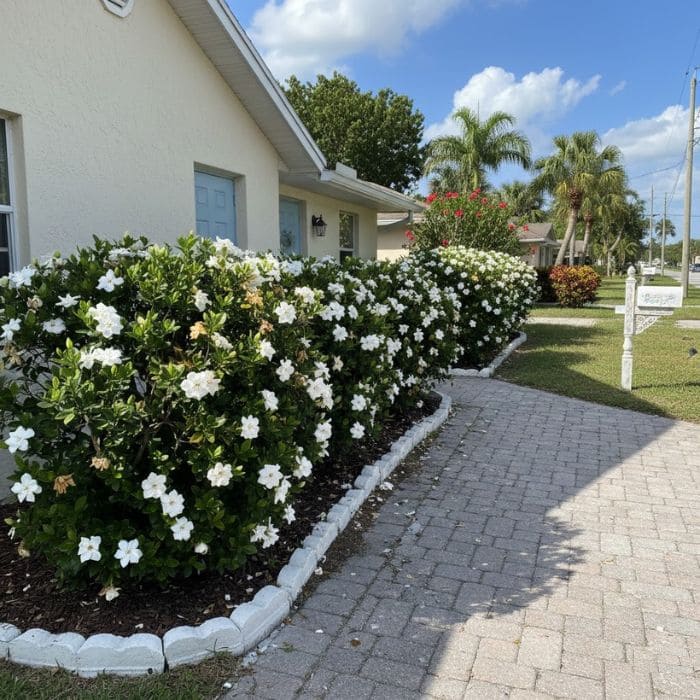
Gardenia belongs in Florida. You feel that almost immediately when you see it growing here.
The warmth, the humidity, the filtered sunlight through porches and palms all suit it in a way that feels effortless.
Gardenia shrubs are common in residential neighborhoods, planted near windows, fences, or walkways, where their scent can drift naturally without being confined.
The flower itself is unmistakable. Thick, waxy petals arranged in tight spirals or layered cups, usually a clean white or soft ivory, framed by deep green leaves that shine slightly even without direct sun.
When you hold a gardenia bloom, it feels substantial, almost weighty, as if it carries its scent inside rather than releasing it all at once.
In Florida, gardenias are available most of the year, especially from late spring through early fall, and local florists often receive them fresh because they don’t travel well over long distances.
Why I Arrange Gardenia Alone, Every Time
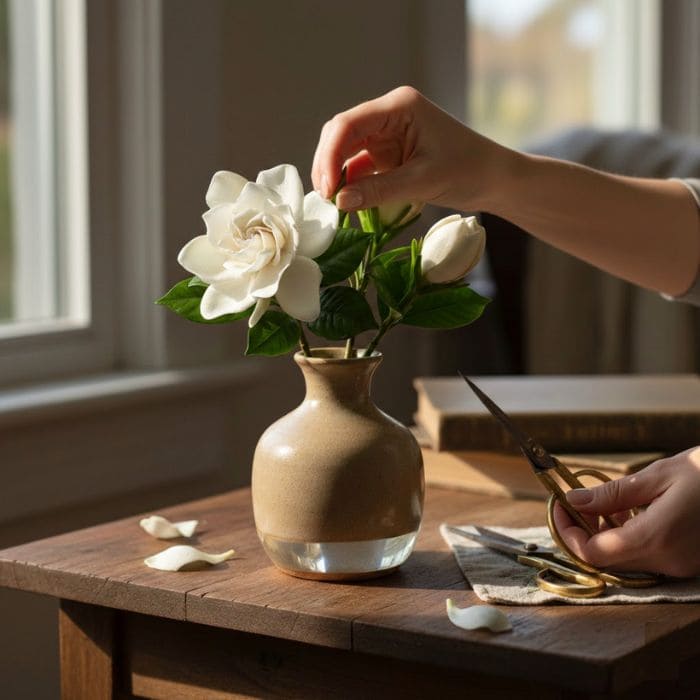
When I bring gardenia inside, I never mix it with other flowers.
Gardenia has a complex fragrance that does not blend politely. When paired with other blooms, even subtle ones, the scent becomes muddled and heavier than intended.
I usually choose three to five blooms, depending on the size of the vase and the maturity of the flowers. Fully open blooms release scent faster, while tighter buds extend the experience over several days.
I prefer a low to medium ceramic vase with a narrow mouth, something that supports the stems without forcing them upright or crowding the blooms.
The water level stays lower than what I use for most flowers. Gardenia stems are firm, but they soften quickly if submerged too deeply.
I re-cut the stems with clean, sharp scissors and remove any leaves that might sit below the waterline, because even slight bacterial buildup shortens the life of the blooms.
How I Keep Gardenia Calm and Lasting Indoors
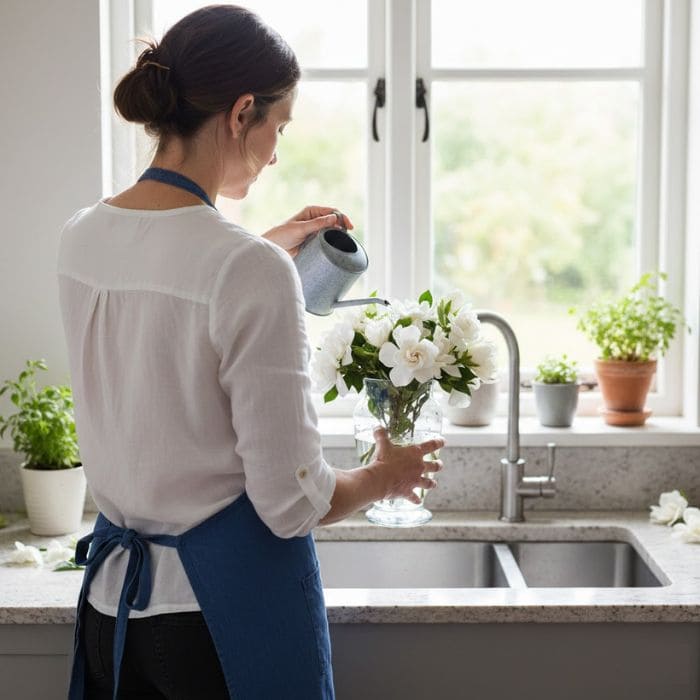
Gardenia needs stability more than anything else.
I place the vase in indirect light, never in direct sun, and always away from heat sources like lamps, vents, or electronics. Sudden temperature changes stress the petals, causing browning at the edges.
I change the water every day, even if it looks perfectly clear. Gardenia reacts quickly to invisible bacteria, and waiting an extra day often shows in the petals before you notice it in the vase.
I also avoid touching the blooms. The oils from hands leave marks on the waxy surface, and those marks usually darken within hours.
With this care, gardenia opens slowly, releases its fragrance gently, and fades in a way that feels intentional rather than abrupt.
The Fragrance That Moves With the Day
Gardenia fragrance behaves differently from artificial scent and even from many other flowers. It is layered.
At first, it feels green and fresh, then creamy, then slightly warm, almost buttery.
During the day, especially with natural light and gentle airflow, the scent remains soft and intermittent.
You notice it when you walk past the table, when you sit down to read, when the room is quiet enough to register it. This is why it works in my bedroom.
Why I Never Keep Gardenia Near My Bed at Night
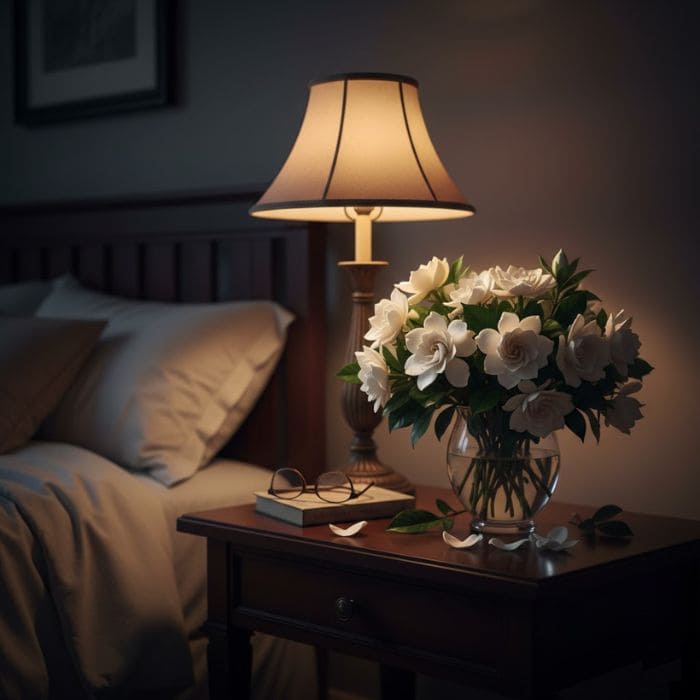
At night, the air becomes still, the temperature drops slightly, and the room closes in on itself. Gardenia responds to that shift by releasing its fragrance more fully, more densely.
What feels gentle during the day can feel heavy at night, especially in a closed bedroom.
I used to wake up feeling overstimulated rather than rested, unable to explain why until I realized the scent had intensified after dark.
Now, I move the gardenia vase out of the bedroom in the evening or place it farther away, allowing the room to return to neutrality. Sleep needs emptiness more than beauty.
In the morning, when light returns and windows open, so does the gardenia.