Eucalyptus Never Left My House
Even before I stayed at home, even during the busiest years when weekends disappeared and life felt permanently rushed, there was always eucalyptus somewhere in my house. I did not rotate it like flowers. A few branches would sit quietly on a shelf, lean against a wall in a tall vase, or rest near the…
Even before I stayed at home, even during the busiest years when weekends disappeared and life felt permanently rushed, there was always eucalyptus somewhere in my house.
I did not rotate it like flowers. A few branches would sit quietly on a shelf, lean against a wall in a tall vase, or rest near the entryway.
Now that I am home every day, I notice how often I reach for it without thinking.
Why Eucalyptus Feels Different
When I was young, my grandmother kept eucalyptus branches near the windows of her house. I asked her why she did not put flowers there instead.
She smiled and said, “Flowers are for joy, but eucalyptus is for balance. When the house feels heavy, eucalyptus reminds the air to move.”
Back then, I thought she meant it literally. Now, I understand it differently. Some plants are about how a space feels when no one is speaking.
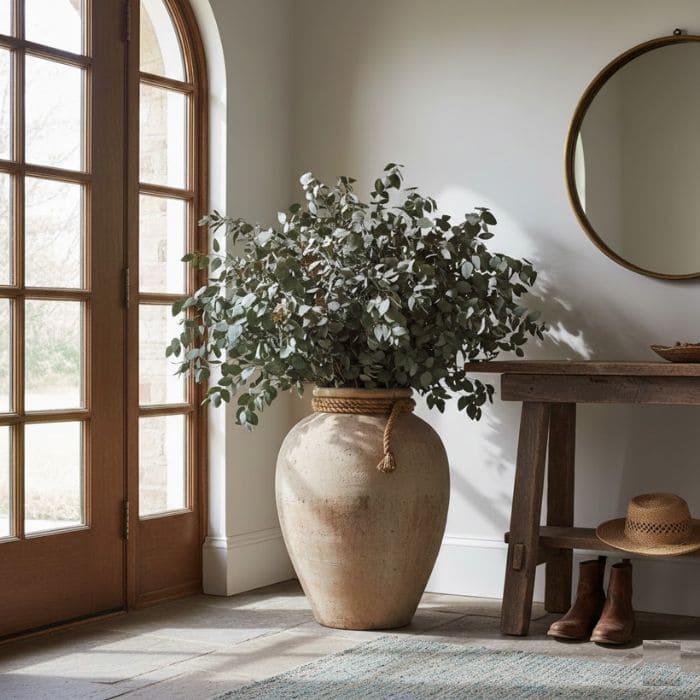
Eucalyptus leaves are unlike most foliage we use indoors. They are thick, slightly leathery, and coated with a natural wax that helps them retain moisture.
When fresh, the leaves feel cool to the touch, almost rubbery, with a smooth surface that reflects light softly rather than shining.
Depending on the variety, the leaves can be long and narrow or round and coin-shaped. The color ranges from deep green to blue-green, often with a silvery film that becomes more visible as the branch dries.
That muted color is one of the reasons eucalyptus works so well indoors. It does not fight with furniture, wall color, or light, it calms everything around it.
When you bruise a leaf, the scent releases immediately. Sharp at first, then clean, then slightly sweet. It is closer to the feeling of opening a window after rain.
The Structure of Eucalyptus Branches
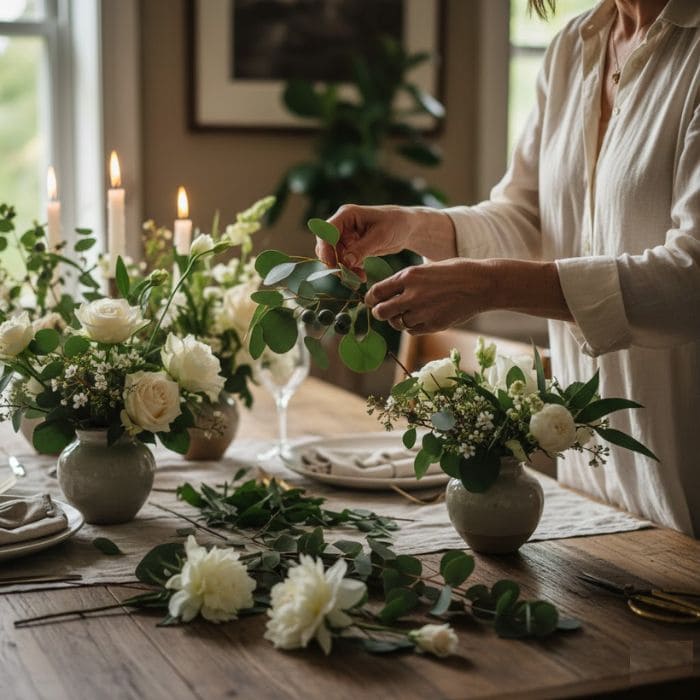
Eucalyptus branches have a natural architecture that makes them easy to work with, even for beginners. The stems are strong but flexible, allowing you to bend them slightly without snapping.
Leaves grow alternately along the stem rather than clustering tightly, which creates space and movement in an arrangement.
This spacing is important. It allows air to move between the leaves, helping eucalyptus last longer indoors.
It also means that a single branch can fill visual space without looking heavy. Two or three branches are often enough for a tall vase, especially if you let them fan outward naturally.
As eucalyptus dries, the branches hold their shape. The leaves shrink slightly but do not curl or collapse. This is why eucalyptus transitions so well from fresh to dried without needing intervention.
Where Eucalyptus Works Best Indoors
Eucalyptus contains natural oils, most notably cineole, which is responsible for its distinct scent.
These oils are known for their clarifying and antibacterial properties, but what I notice most is how the air feels when eucalyptus is nearby. The room feels lighter. Breathing feels easier, especially in the evening or after cleaning.
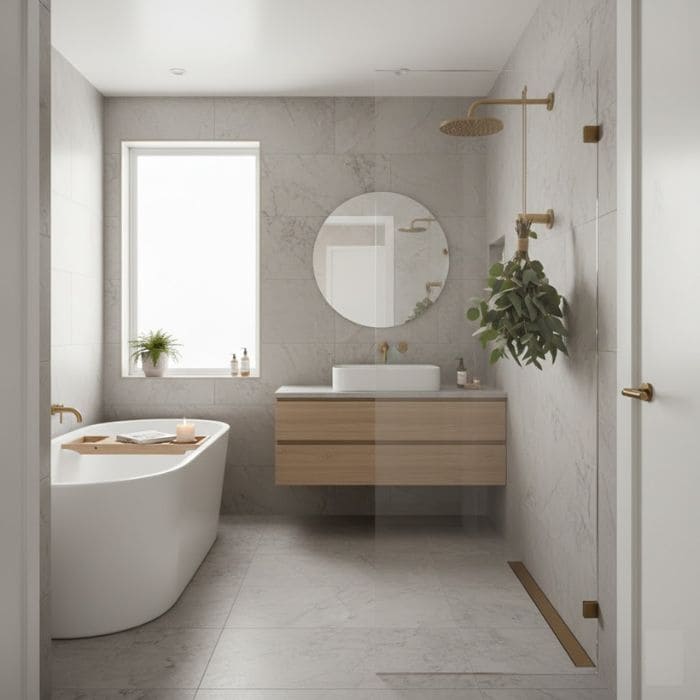
I rarely place eucalyptus where people sit for long periods. Instead, I place it in transitional spaces.
Near the front door, where the scent greets you before you fully enter the house. Along the hallway, where the branches respond to movement as someone walks past. In the bathroom, where steam from showers helps release the oils gently without effort.
I prefer tall, narrow vases for eucalyptus. The height allows the branches to stretch and lean naturally, which prevents the arrangement from feeling stiff. Short, wide vases tend to crowd the stems and limit air circulation.
The Tip That Makes All the Difference
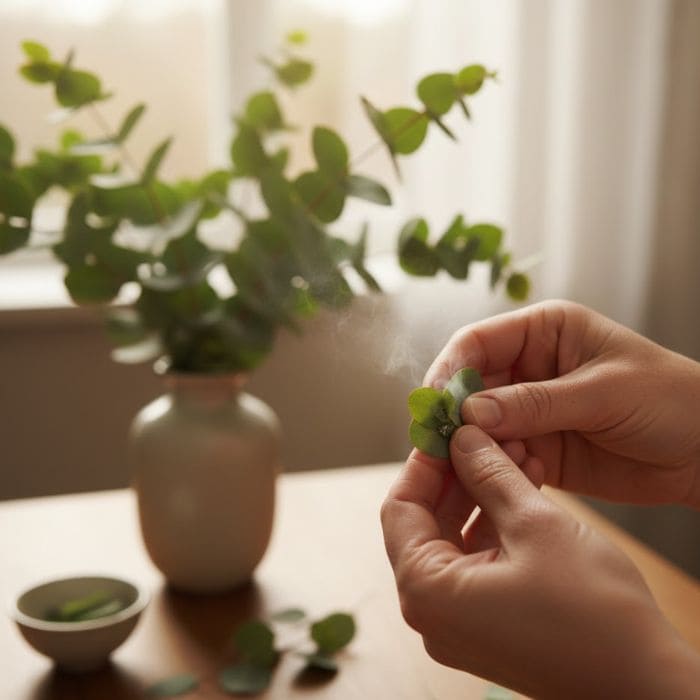
Here is the detail that changed how eucalyptus behaves in my house. Before placing eucalyptus in water, I gently crush a few leaves.
I take my fingers and lightly roll or press the leaves until I feel the oils release. You can smell the difference immediately. The scent becomes warmer, fuller, and more present in the room.
This works because eucalyptus oils are stored inside the leaf structure. Without crushing, the leaves remain sealed, and the scent stays mostly contained.
Watching Eucalyptus Change Over Time
On the first day, the scent is clear and sharp. After a few days, it softens and becomes steadier. As the branches dry, the color fades into a muted gray-green, and the scent becomes faint but still noticeable if you brush past it.
Even fully dried, I often leave eucalyptus in place. It no longer scents the room, but it holds its form and reminds me of stillness. Fresh or dried, it continues to do its quiet work.