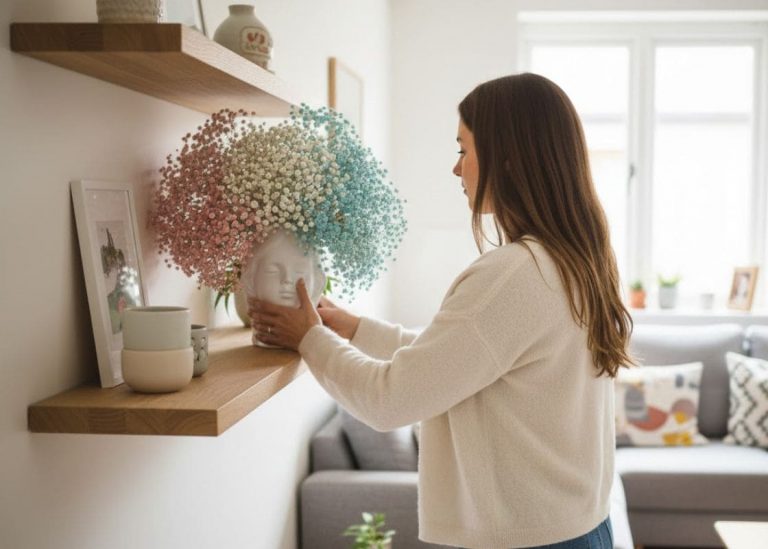
Carnations Has Become My Favorite Flowers Recently
Besides red tulips, the flower I reach for most often is the carnation. This usually surprises people when they hear it, and I understand why. Carnations don’t carry the excitement of peonies or the immediate romance of roses. They aren’t seasonal stars or social-media favorites. They rarely stop anyone in their tracks at first glance….
Besides red tulips, the flower I reach for most often is the carnation. This usually surprises people when they hear it, and I understand why.
Carnations don’t carry the excitement of peonies or the immediate romance of roses. They aren’t seasonal stars or social-media favorites. They rarely stop anyone in their tracks at first glance.
And yet, they have quietly become one of the most consistent presences in my home.
When I was a teenager, carnations were rare in my hometown.
I saw them mostly on formal occasions, sometimes in church arrangements or at ceremonies where flowers were chosen carefully and sparingly. They felt distant then, almost reserved for moments that required seriousness.
We didn’t casually bring carnations home. But now, years later, they are everywhere.
How Carnations Became So Widely Available
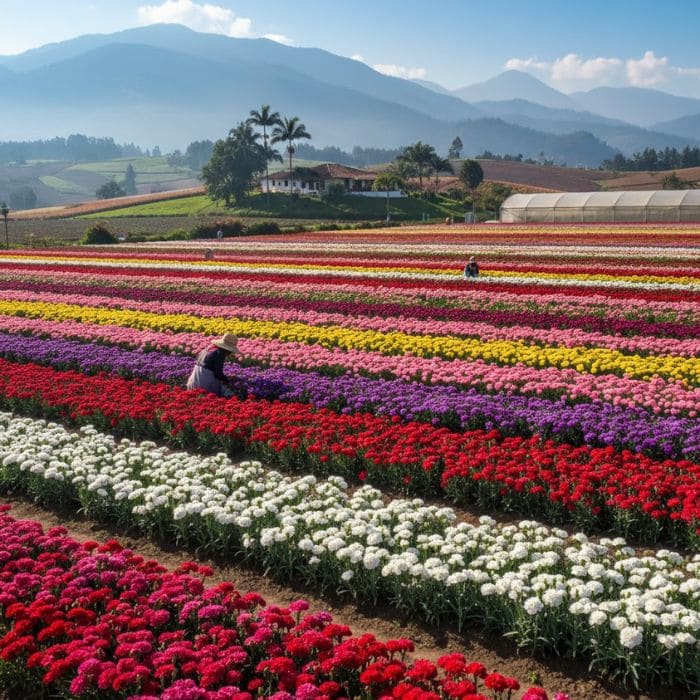
Today, you can find carnations in almost every market and florist shop in America, and there is a practical reason for that.
Nearly 90 percent of the carnations sold in the United States are imported from Colombia.
The growing conditions there are almost ideal. High-altitude farms provide cool nights, consistent daylight, and stable temperatures, which allow carnations to grow slowly and evenly.
This environment produces flowers with strong stems, tightly layered petals, and exceptional durability.
Carnations tolerate long transport far better than many delicate flowers, arriving fresher and holding up longer on shelves and in homes.
That reliability has made them a favorite not only among florists, but also among buyers who want flowers that can live alongside real life, not just decoration.
The Meaning of Carnations, Beyond Decoration
Carnations carry symbolism that feels understated but deeply rooted. Traditionally, they represent love, devotion, and endurance.
Different colors carry subtle variations of meaning, but the central idea remains the same: Steadfast affection, and care that doesn’t disappear quickly.
In the Bible, carnations are often associated symbolically with love and sacrifice. Some Christian traditions connect carnations to maternal love and care, which is why they are frequently linked to Mother’s Day.
As I’ve grown older, that meaning feels more relevant than it ever did when I was young.
A Fragrance That Knows When to Step Back
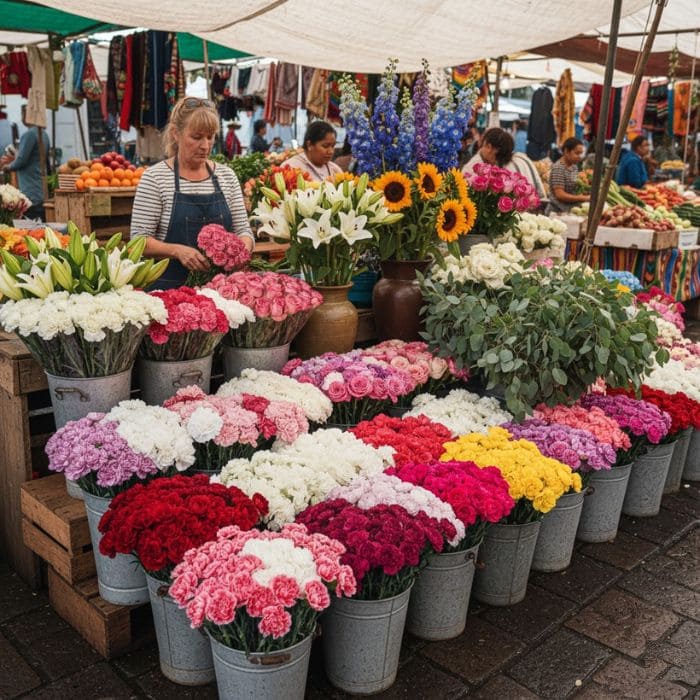
Carnations do have a scent, but it behaves differently from most flowers. It’s lightly spicy, sometimes described as clove-like, warm rather than sweet.
The fragrance doesn’t rush to fill a room. You notice it only when you move close, when you lean in, when the air is still.
This is one of the reasons carnations work so well in lived-in spaces. They don’t compete with the smell of food in the kitchen, clean laundry in the bedroom, or fresh air coming through open windows.
They exist alongside daily life without demanding attention. For me, that restraint matters.
Why Carnations Are So Easy to Arrange
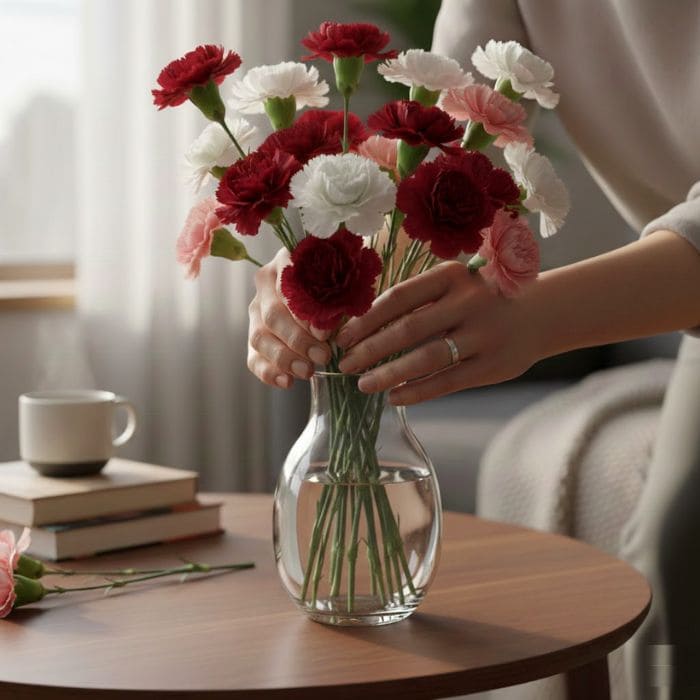
One of the greatest strengths of carnations is how forgiving they are. Their stems are sturdy but flexible. Their blooms are full without being heavy. You don’t need many stems to create an arrangement that feels intentional.
Carnations work beautifully on their own, especially when arranged in one or two colors. Their ruffled petals create texture naturally, so there’s no need for filler flowers unless you want them.
They also pair well with simple companions like eucalyptus, baby’s breath, or even tulips, because they don’t dominate visually.
When I arrange carnations, I prefer medium-height vases with slightly wider openings. I let the stems fan outward gently, resisting the urge to correct every angle.
Carnations settle into their shape over time, and the arrangement often looks better after a day than it did at the beginning.
My Advices to Care for Carnations in a Vase
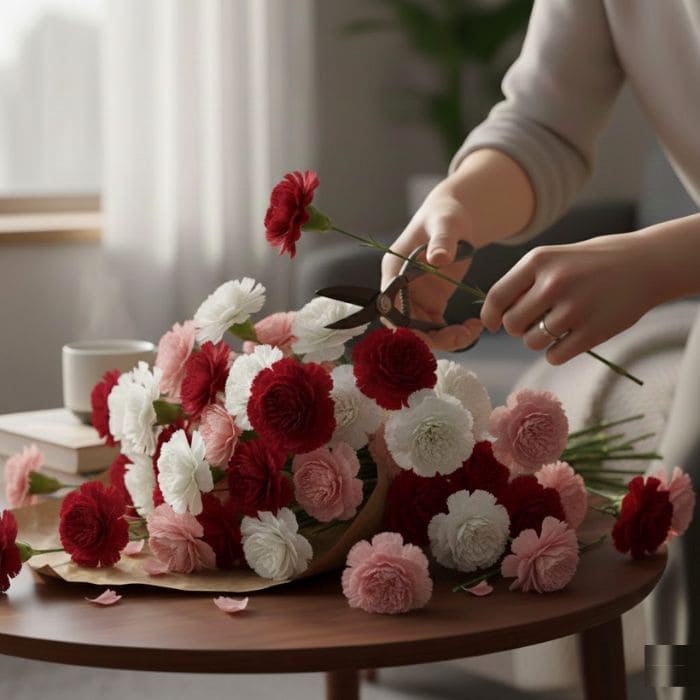
Caring for carnations is refreshingly straightforward, which is part of their appeal. I clean vase and fresh, room-temperature water. I re-cut the stems at a sharp angle and remove all leaves that would sit below the waterline.
Carnations prefer consistency over constant interference. I usually change the water every two to three days rather than daily, unless the water becomes cloudy sooner.
When I refresh the water, I trim only a small portion of the stem, just enough to reopen the cut surface.
They tolerate normal room temperatures well and don’t require special placement.
I avoid direct heat and fruit bowls, but otherwise, they adapt easily. With this simple care, carnations often last ten days or more in my home, sometimes stretching even longer.