A Lesson I Learned the Hard Way With White Roses
There was a time when I felt quietly proud of my progress with flowers. I had begun to trust my hands, my eyes, and my instincts. Then a single vase of roses reminded me that flowers do not reward confidence without understanding. A Gift From Annie The roses came from my best friend, Annie. When…
There was a time when I felt quietly proud of my progress with flowers.
I had begun to trust my hands, my eyes, and my instincts. Then a single vase of roses reminded me that flowers do not reward confidence without understanding.
A Gift From Annie
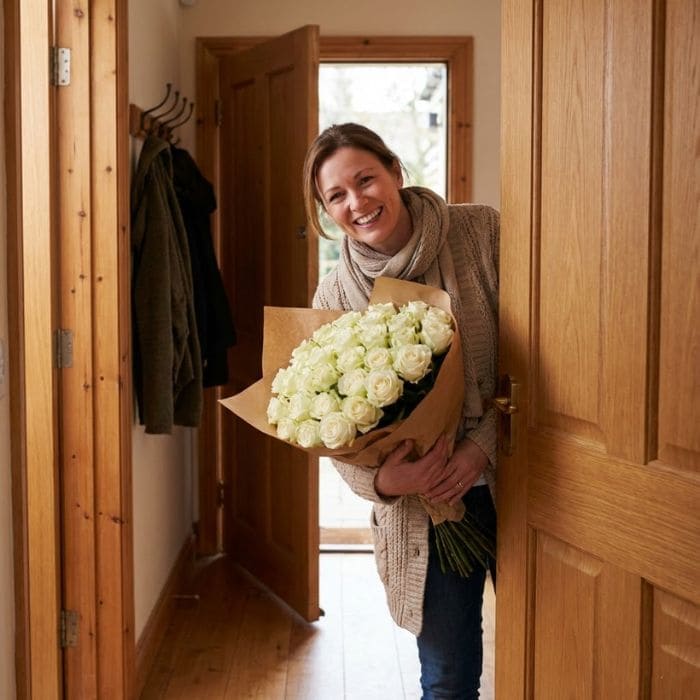
The roses came from my best friend, Annie.
When she heard that I had been staying home more and spending my afternoons arranging flowers, she showed up one morning with a wrapped bouquet and a smile. Inside were fresh white roses, fragrant in a way that filled the room immediately.
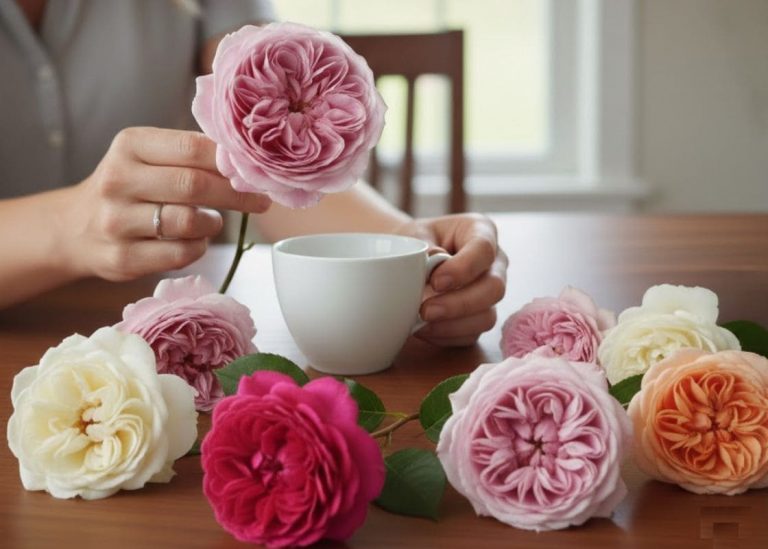
She told me they were Hybrid Tea roses, specifically the variety known as John Paul II. Even before I looked them up, I could tell they were different from the standard white roses I had handled before.
The blooms were large, with high-centered petals that opened slowly and deliberately. The color was not a flat white, but a creamy ivory with a soft glow, especially near the center.
Later, I learned more about them. John Paul II roses were introduced in the early 2000s and named in honor of Pope John Paul II, chosen for their purity of color and exceptional fragrance.
Unlike many modern roses bred mainly for appearance, this variety is known for its strong, classic rose scent, rich but clean, the kind that lingers without becoming heavy.
Each bloom can reach around 12 to 14 centimeters across when fully open, and the stems are long and elegant, making them a favorite for formal arrangements and special gifts.
Knowing all this afterward made the mistake sting a little more.
My Assumption About Roses
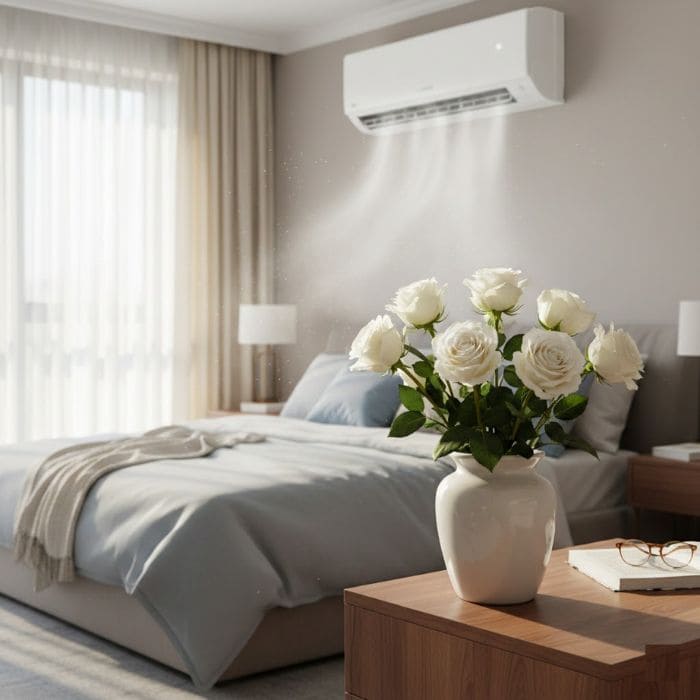
In my mind, roses needed moisture, calm air, and protection from heat. That logic made sense to me at the time.
Our Florida sun can be harsh, and windows bring both light and warmth. I worried that placing the vase near a window would dry them out too quickly.
So instead of putting them in the living room, where most of my arrangements usually live, I placed the vase in our bedroom, directly under the air conditioner.
My thinking was simple. Cooler air would slow the blooming process, less light would reduce stress, and stable temperature would help them last longer.
The First Day
After the first full day, the roses looked unchanged, which I took as a good sign. The blooms were upright and firm. The outer petals were smooth and unmarked.
When I leaned in, the fragrance was still strong, maybe even sharper than before, concentrated in the cooler air.
The water level had barely dropped, and the stems felt stiff and well-supported by the vase. And I went to bed that night feeling satisfied, convinced I had done the right thing.
Three Days Later
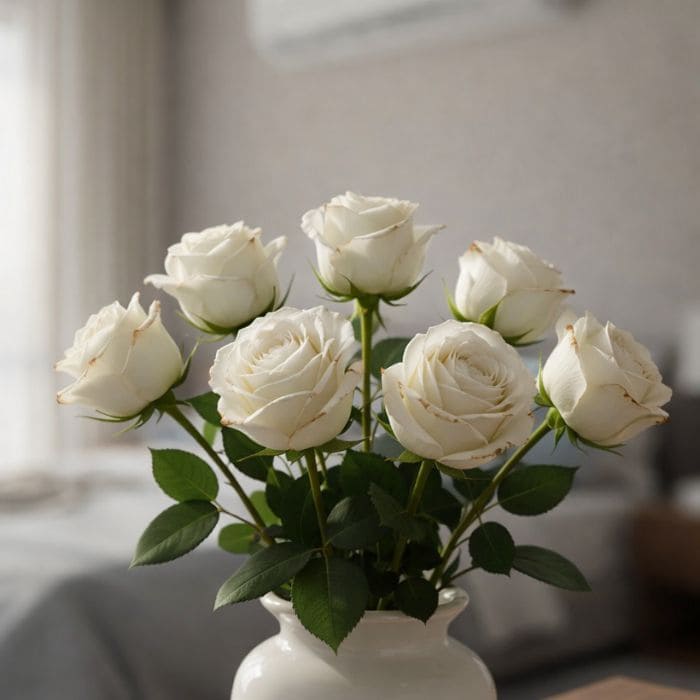
By the third day, the changes were subtle but noticeable if you looked closely. The roses had not opened any further. The petals felt tighter instead of relaxed, as if they were holding themselves in.
Also, a few outer petals began to show faint discoloration at the edges, not brown exactly, but slightly translucent and dry.
The fragrance was still present, but it had changed. It no longer filled the room gently. Instead, it felt sharper and thinner.
I changed the water, trimmed about one centimeter off each stem, and wiped the inside of the vase clean. I told myself they just needed encouragement.
The Days After That
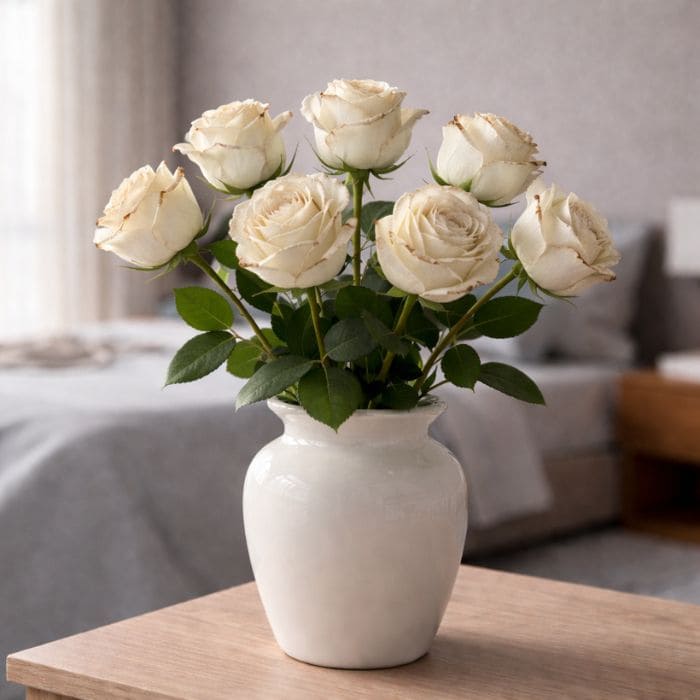
Two days later, the decline became obvious. One bloom bent forward sharply at the neck, folding in a way that felt sudden rather than gradual.
Another never opened at all and began to curl inward instead, its petals tightening rather than spreading. The leaves felt dry to the touch, not wilted, but brittle along the edges.
What confused me most was that nothing looked rotten. The water stayed clear. There was no unpleasant smell. The roses simply lost their strength without ever reaching their full beauty.
I stood there confused, staring at the vase, replaying every step in my head.
Calling Jennifer
That afternoon, I called Jennifer and described everything I had done. She listened without interrupting, which I have learned usually means I have made a basic mistake.
When I finished, she paused and said gently, “Roses don’t like to be cold and dry at the same time.”
She explained that while roses do enjoy cool temperatures, constant direct air conditioning creates dehydration. The airflow pulls moisture not just from the room, but from the petals themselves.
Hybrid Tea roses, especially fragrant varieties like John Paul II, have thinner petals than they appear to, and their fragrance oils evaporate faster in dry, circulating air.
“They need stillness,” she told me. “Cool, yes. But calm.”
She explained that placing roses near an air conditioner can shock them, preventing proper opening and weakening the neck of the stem. The rose essentially pauses its natural process, then collapses once it can no longer sustain itself.
What I Do Differently Now
Now, I place roses in a bright but indirect location, away from vents and drafts. I allow them gentle warmth and stable air.
I still change the water every two days, trim the stems, and remove outer guard petals if needed, but I no longer try to protect them by hiding them away.
This experience taught me something important. Caring too much in the wrong way can be just as damaging as neglect.