I Turned My Roses Into Jam Successfully
Last night, after everyone had gone to bed and the house had settled into its soft, late silence, I sat on the sofa scrolling through old posts on my blog. I realized how many flowers I’ve shared over the past year and how often I’ve written about arranging them, trimming them, extending their vase life,…

Last night, after everyone had gone to bed and the house had settled into its soft, late silence, I sat on the sofa scrolling through old posts on my blog.
I realized how many flowers I’ve shared over the past year and how often I’ve written about arranging them, trimming them, extending their vase life, protecting their petals from humidity or air conditioning.
Over the past few months, I’ve also received emails from other housewives, women like me, who love flowers but sometimes feel guilty about how short their beauty lasts.
A few of them wrote that they wished flowers could stay longer in some form, not just in photographs.
And recently, I discovered another way to live with roses that has nothing to do with vases: rose petal jam.
I had heard about it before, mostly in passing, something mentioned in travel stories about the Middle East or parts of Eastern Europe.
But I had never tried making it myself. So I decided to try.
Choosing the Right Roses
Before I even began, I had to say we could not use florist roses because many cut roses sold in shops are treated with preservatives and chemicals during transport.
Cooking with them is not safe. I needed roses that were grown without pesticides.
Luckily, I have someone in my neighborhood who grows exactly that.
Three houses down from mine lives Mrs. Eleanor Hayes, a retired teacher who spends most mornings in her small backyard garden.
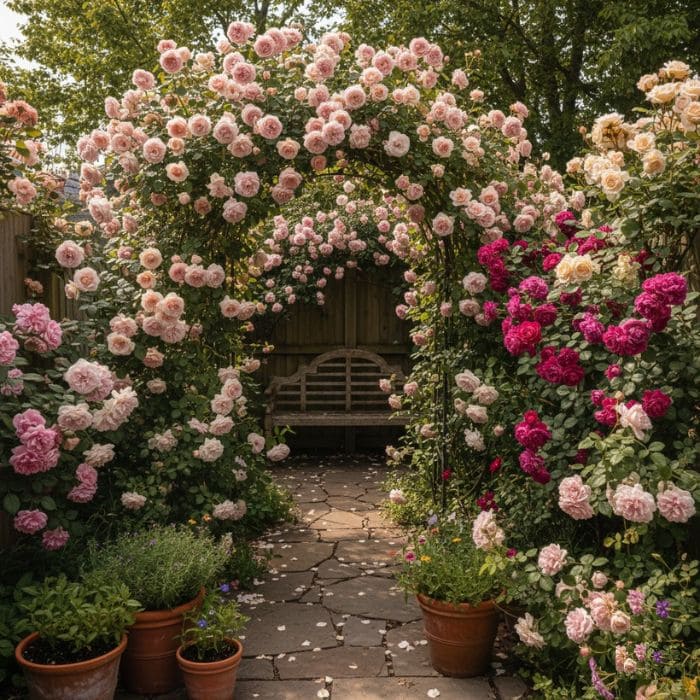
Her fence is covered in climbing roses, mostly old varieties she planted years ago.
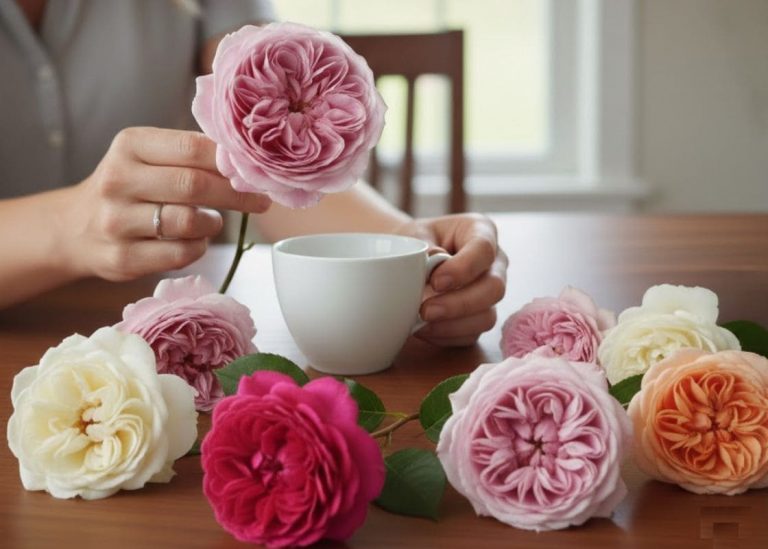
They are not the long-stemmed hybrid teas you see in supermarkets. They are old garden roses with heavily petaled, deeply fragrant, slightly irregular in shape, and much more expressive.
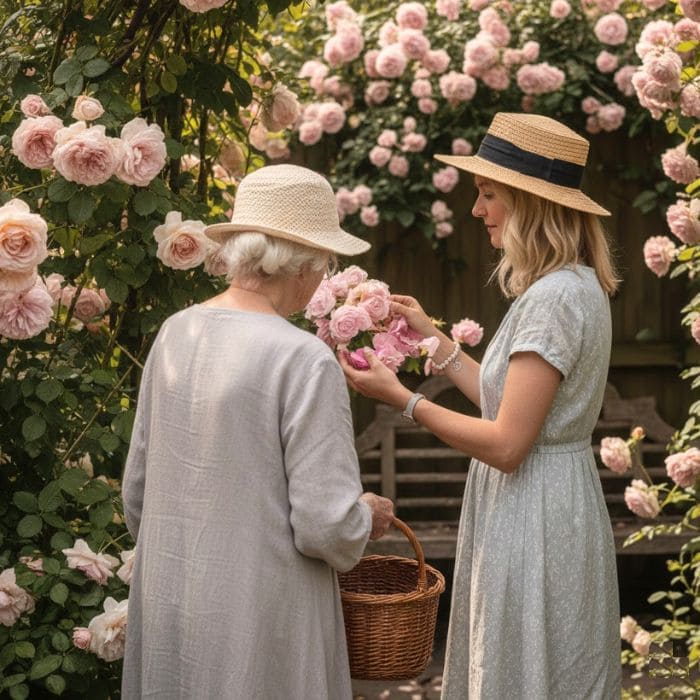
Last Saturday morning, I walked over with a small basket and asked her directly, “Eleanor, have you ever made anything edible with your roses?”
She laughed softly and said, “Only memories. But my grandmother used to make rose syrup.”
I told her I was thinking about rose petal jam.
She grew serious for a moment and said, “If you’re going to cook with them, only use petals from bushes that haven’t been sprayed. And remove the white base at the bottom of each petal. That part can taste bitter.”
She walked me around her garden and showed me which roses were safest to harvest.
The ones she recommended were deep crimson heirloom roses with dense petals and a scent so rich that it lingered on my fingers after touching them.
“Smell this one,” she said, handing me a bloom that had opened fully in the morning sun.
The fragrance was intense, lightly honeyed, and almost velvety.
“Flavor follows fragrance,” she told me. “If it smells weak, it will taste weak.”
I carefully picked enough petals to fill two cups once separated, making sure to choose blooms that were freshly opened but not wilting.
My First Attempt
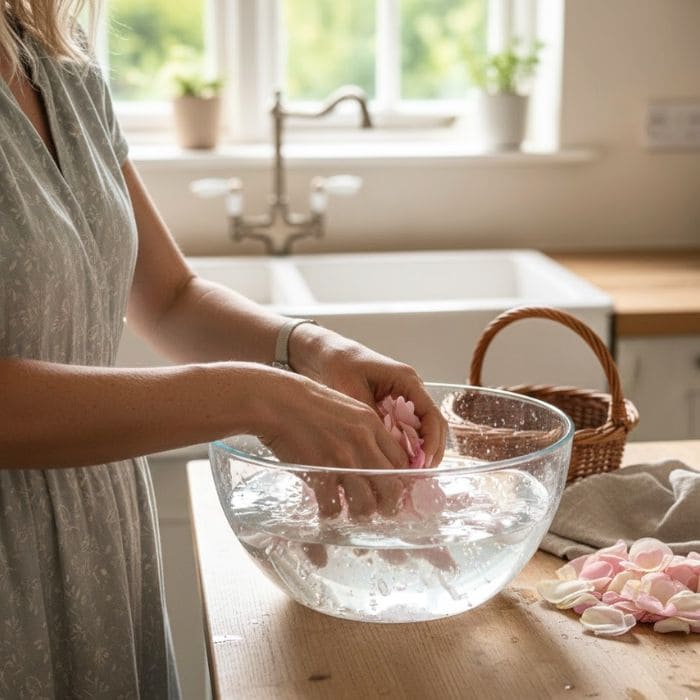
Back home, I washed the petals gently in a large bowl of cold water to remove dust and tiny insects. I removed the white base from each petal, as Eleanor instructed.
It took longer than I expected as each petal had to be inspected carefully.
For my first attempt, I combined:
- 2 cups tightly packed rose petals
- 1 ½ cups sugar
- 1 cup filtered water
- 1 tablespoon fresh lemon juice
I made my mistake in the heat. I turned the flame too high, thinking I could shorten the cooking time.
Within minutes, the mixture began bubbling aggressively. The petals darkened too quickly, and the fragrance flattened.
When the jam cooled, it was thick but lacked depth. The scent had dulled into something almost caramelized.
The Second Attempt
The second time, I followed Eleanor’s advice more carefully and lowered the heat.
First, I layered the rose petals with half the sugar and let them sit for two hours. This step allowed the sugar to draw out natural moisture, deepening the color and softening the texture.
In a saucepan, I dissolved the remaining sugar into water over very low heat, stirring gently until the liquid was clear. Only then did I add the petals and lemon juice.
This time, I kept the mixture at a slow simmer for about 25 minutes.
The kitchen slowly filled with the scent of roses. Then the petals became translucent, like thin ruby silk suspended in syrup.
When I tested a spoonful on a chilled plate, it held its shape gently without spreading too thin.
The Third Attempt
By the third attempt, I adjusted the sugar slightly down to 1 ¼ cups because I prefer softer sweetness.
I also added a very small pinch of finely grated orange zest, something I thought might lift the floral notes without competing.
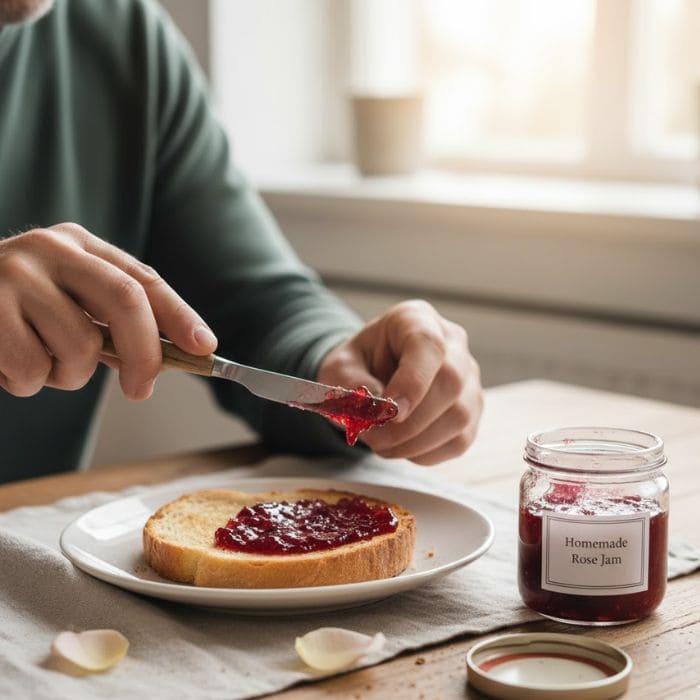
The jam had a glossy texture, thick enough to spread but not stiff. The petals remained visible, curling slightly within the syrup.
When I spread it over warm toast the next morning, the heat released a fragrance that felt like stepping into Eleanor’s garden just after sunrise.
My husband tasted it and paused before speaking.
“Wow, it tastes like your rose vases,” he said.
Notes I Learned Along the Way
Rose petal jam is delicate, it does not behave like strawberry or blueberry jam.
The scent can disappear if overheated. The texture can become gummy if too much sugar is used. So, always remove the white base of each petal to avoid bitterness.
Next, storage is important. I pour the finished jam into sterilized glass jars while still warm and keep them refrigerated.
Because it is a small-batch recipe without commercial preservatives, I consume it within two weeks.
Another important detail: color can change depending on the rose variety. Deep red petals produce ruby-colored jam, while pink petals create a softer blush tone.