I Arranged Chrysanthemums When the Indoor Air Was Heavy
I know I’ve written about chrysanthemums several times already, and before starting this post, I hesitated. I asked myself if I was repeating the same flower too often. But last week reminded me that some flowers return again and again because they quietly answer real needs when life changes. This time, chrysanthemums weren’t about beauty…
I know I’ve written about chrysanthemums several times already, and before starting this post, I hesitated.
I asked myself if I was repeating the same flower too often. But last week reminded me that some flowers return again and again because they quietly answer real needs when life changes.
This time, chrysanthemums weren’t about beauty alone. They were about air, comfort, and a feeling of safety inside my home.
The Week the Air Felt Different

About a week ago, the weather forecast in Florida shifted in a way that made me uneasy. It wasn’t a storm warning or extreme heat alert.
My local news editor mentioned a decline in air quality across parts of the state, caused by stagnant weather conditions, higher humidity, increased traffic particles, and agricultural burning in surrounding areas.
As a mother, I don’t just hear weather reports. I translate them into daily life. I thought about my son, who has always been more sensitive to air quality than adults.
When the air feels heavy, he tends to breathe through his mouth more, rubs his nose often, and complains that his head feels tight, a word he uses when he doesn’t quite know how to describe discomfort.
When Chrysanthemums Started Appearing Everywhere
That same day, while scrolling through my social feeds, I noticed something that felt almost coordinated.
Several people I follow, gardeners, home accounts, and even a few wellness-focused pages, were sharing chrysanthemums.
Some mentioned their role in improving indoor environments. Others spoke more emotionally, saying chrysanthemums made their homes feel cleaner or calmer during days when the air outside felt off.
At first, I was skeptical as flowers are not machines, they don’t replace ventilation or filtration. So I searched further.
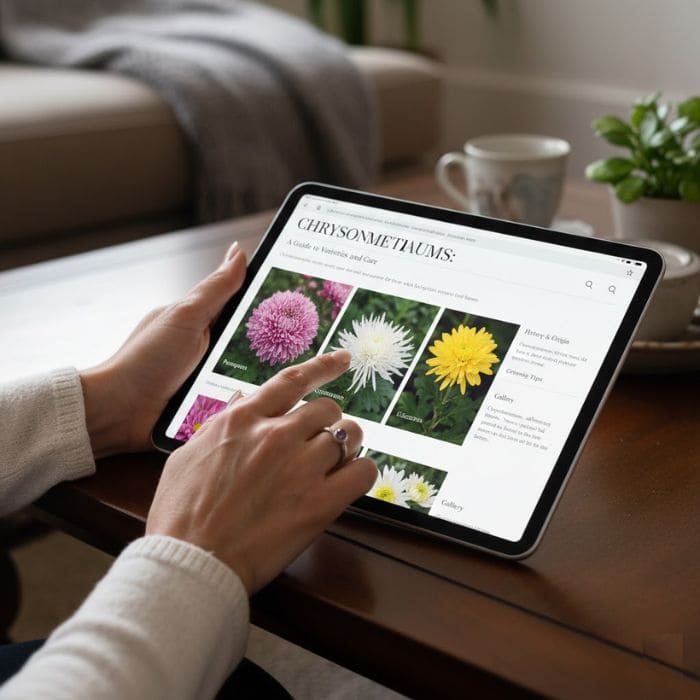
When I started searching more seriously about chrysanthemums and indoor air, I kept coming across references to the NASA Clean Air Study.
This study examined how certain common houseplants interact with indoor pollutants, especially in closed environments.
According to that research, chrysanthemums are among the plants shown to help reduce airborne chemicals such as trichloroethylene, formaldehyde, benzene, xylene, and ammonia.
These substances are commonly found in indoor environments, released from things like cleaning products, furniture, paints, synthetic fabrics, and even everyday household activities.
I want to be very clear about how I understand this. Chrysanthemums do not remove these pollutants instantly, and they do not replace proper ventilation or air filtration.
But their presence contributes to a healthier indoor environment by interacting with these compounds over time, especially when combined with airflow and good household habits.
For me, knowing this added a layer of reassurance. It wasn’t about expecting flowers to fix everything. It was about choosing flowers that support the space instead of adding strain to it.
The Morning I Found Only One Bucket Left
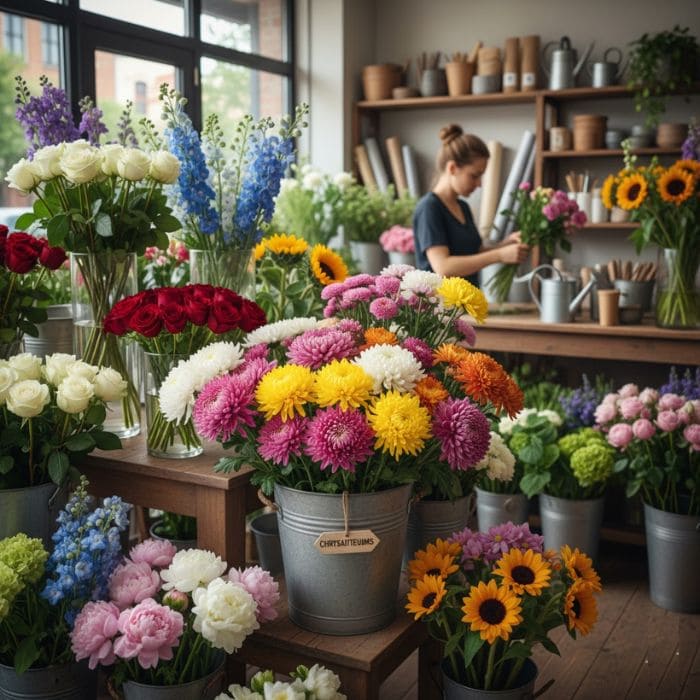
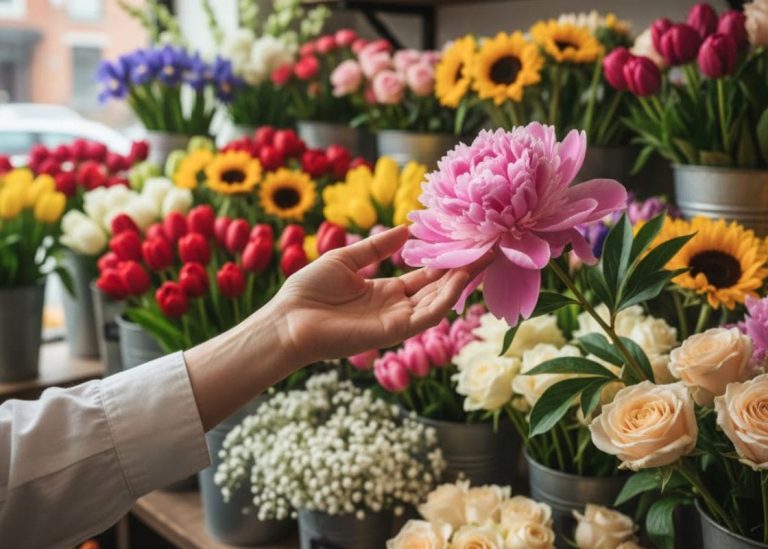
Early the next morning, I walked to Jennifer, expecting her usual display. Normally, there are eight to ten buckets of chrysanthemums lined neatly along the cooler. White, yellow, pale green, sometimes soft pink or lavender, depending on the week.
Oh no! That morning, there was only one bucket left. I paused, surprised, and Jennifer noticed immediately.
She smiled and said that people had been coming in since the air quality warning, asking specifically for chrysanthemums. “They want something that feels steady,” she told me. “Something that lasts and doesn’t add heaviness.”
I chose white and pale yellow chrysanthemums, colors that reflect light and make a room feel more open rather than dense.
The Part I Had to Be Careful About as a Mother
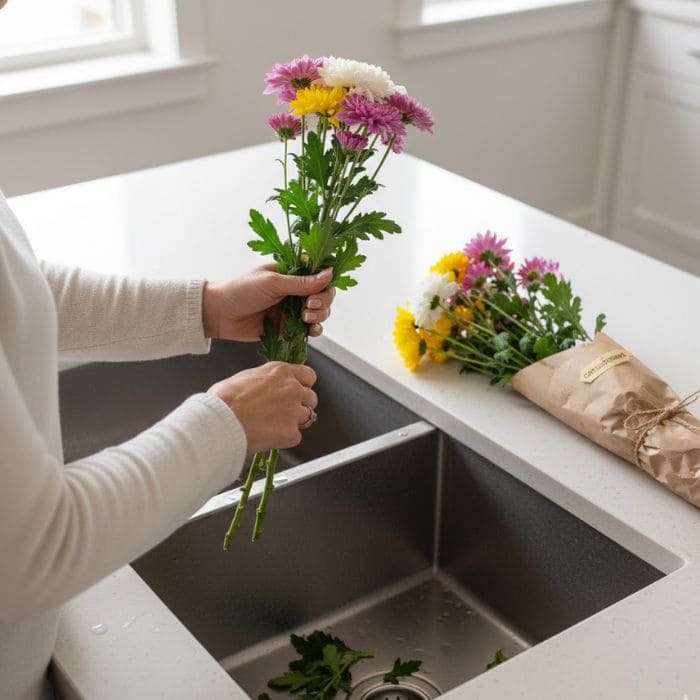
There is another side to chrysanthemums that I think is important to mention honestly. Chrysanthemum leaves are toxic if ingested.
This is something many people overlook, especially when arranging flowers casually at home. Because of my son, I don’t take that lightly.
When I brought the chrysanthemums home, I removed every single leaf from the stems. Not just the leaves below the waterline, but all of them. I didn’t want anything within reach that could become a problem if curiosity took over.
Of course, once I stepped back, I had to laugh a little. The stems looked very clean, without leaves, the arrangement felt slightly bare, almost unfinished.
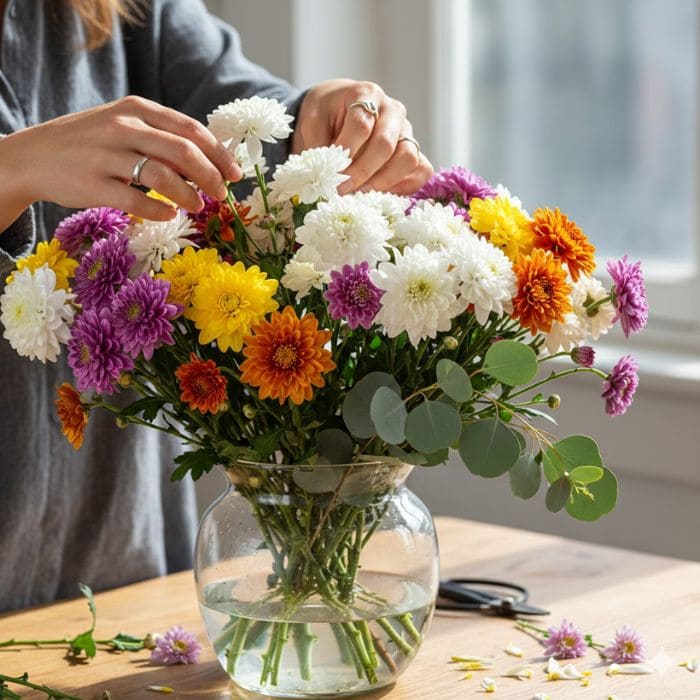
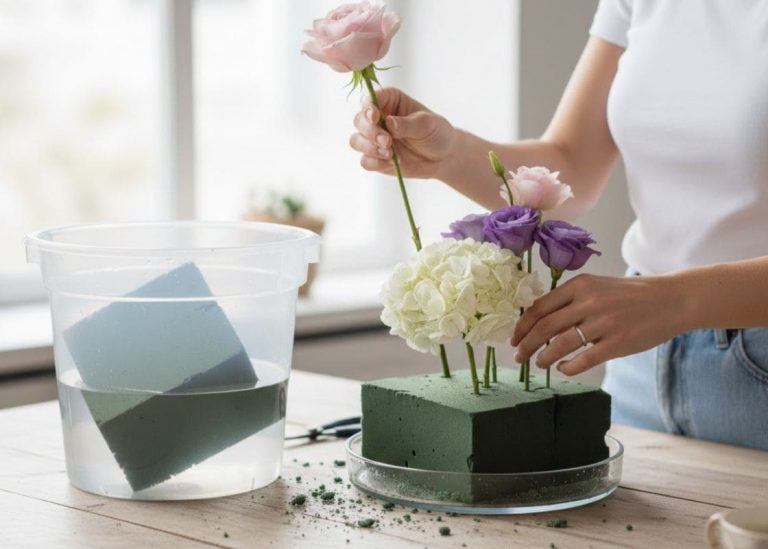
To balance things visually and practically, I added eucalyptus leaves to the vase. Eucalyptus is non-toxic, long-lasting, and visually calming.
Its muted green tones softened the structure of the chrysanthemums and filled the empty space left by removing the leaves.
The combination worked better than I expected. Chrysanthemums provided structure and brightness, while eucalyptus added movement and breath.
The eucalyptus also helped space the blooms slightly apart, improving air circulation around the flowers and preventing overcrowding.
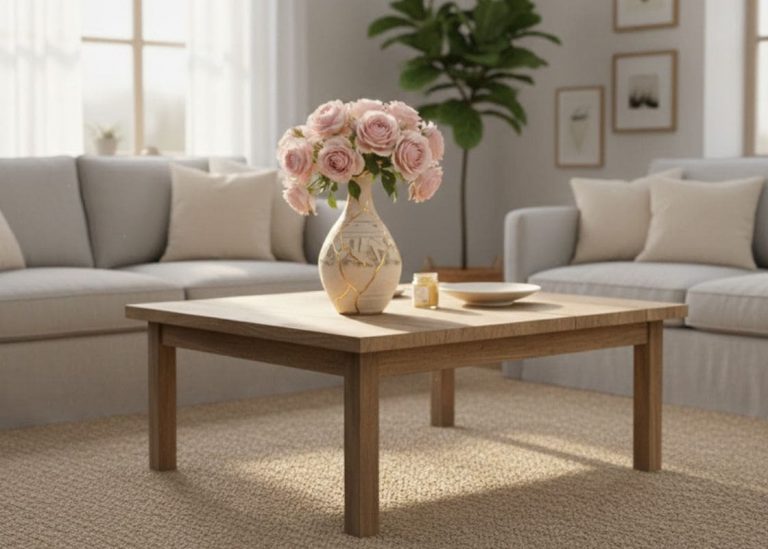
I placed the vase in the living room, close to where we spend most of our daytime hours, but away from the kitchen and direct windows.
I wanted them in still air, where their presence could influence the room rather than compete with drafts or cooking smells.
What I Observed Over the Next Few Days
I want to be honest here. Chrysanthemums did not magically purify the air overnight. What changed was the feeling of the space.
The living room felt lighter, more breathable. The air didn’t smell like anything, which, in moments like this, is exactly what you want.
My son seemed more comfortable during the day, less restless, less sensitive to the heaviness that had been present earlier in the week.
Chrysanthemums themselves thrived. Their petals stayed firm and upright, their structure unchanged even when humidity fluctuated.
Other flowers might have struggled in those conditions, but chrysanthemums held steady, which reinforced my trust in them.
What I Need to Say Honestly
I also need to be clear about something else, I did not rely on chrysanthemums alone.
That same day, I purchased an air purifier and placed it in the living room, running it consistently, especially in the evenings and at night.
I believe the combination mattered. The purifier addressed what flowers cannot, whereas the flowers supported the atmosphere emotionally and visually.