What Should I Choose: Floral Foam or Water?
When I first began arranging flowers seriously, I followed experts closely. I watched professional florists work with confidence, placing stems precisely where they wanted, building height and structure without hesitation. Almost every one of them had floral foam as a core part of their kit. It sat quietly on the table, green and unassuming, yet…
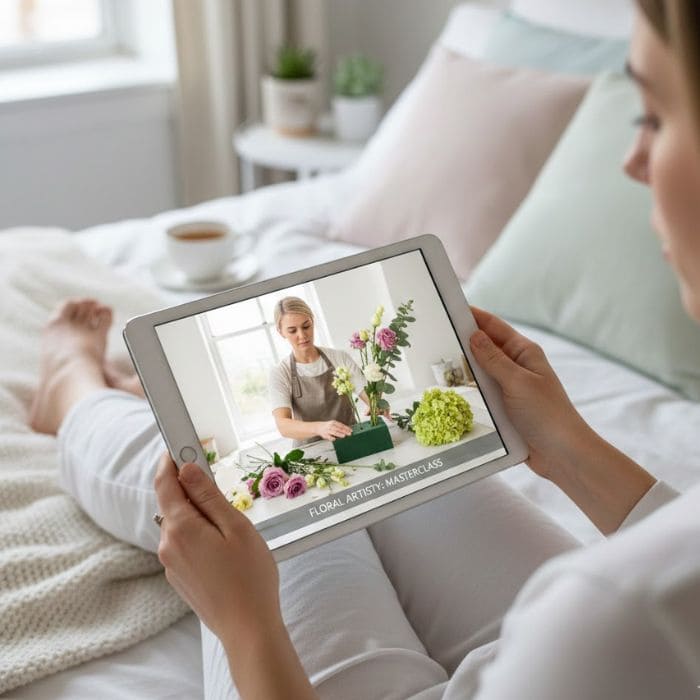
When I first began arranging flowers seriously, I followed experts closely.
I watched professional florists work with confidence, placing stems precisely where they wanted, building height and structure without hesitation.
Almost every one of them had floral foam as a core part of their kit. It sat quietly on the table, green and unassuming, yet clearly essential to the result.
So I followed. I bought floral foam in bulk, and boxes of it with different sizes and shapes.
Looking back, I’m certain I spent over one hundred dollars on floral foam alone, believing it was a necessary investment if I wanted my arrangements to look right.
Why Floral Foam Is So Popular
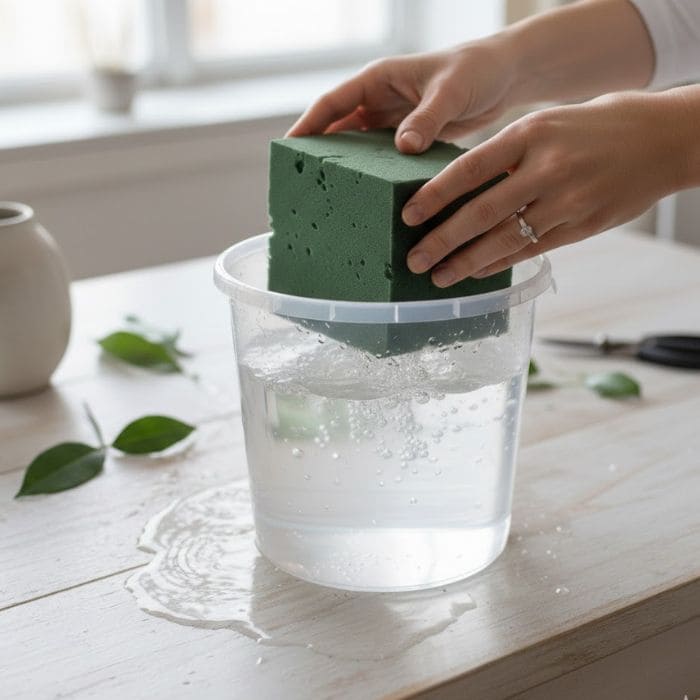
Floral foam is popular because it works extremely well at what it is designed to do.
One block of properly soaked foam can hold up to fifty times its own weight in water, which means stems stay hydrated without needing to sit in a traditional vase.
This moisture retention allows flowers to drink continuously, even when positioned at sharp angles or elevated heights.
Foam gives immediate control. You can create tall centerpieces, dramatic asymmetry, and dense designs that would collapse in plain water.
Stems stay exactly where you put them. For event floristry, weddings, and large-scale installations, this level of control is invaluable.
It also allows speed. Once soaked, a block of foam turns arranging into something almost architectural. You can build and insert. At first, I loved that certainty.
When Control Started to Feel Uncomfortable
Over time, though, the process began to feel heavier than it needed to be, especially in a home setting.
Using floral foam always required preparation. The blocks had to be soaked properly, never forced underwater, always allowed to absorb water slowly.
Therefore, I have to wait, watch, and remember to do it ahead of time.
Some days, I simply didn’t feel like it. I would look at the foam, dry and useless until soaked, and feel resistance instead of excitement.
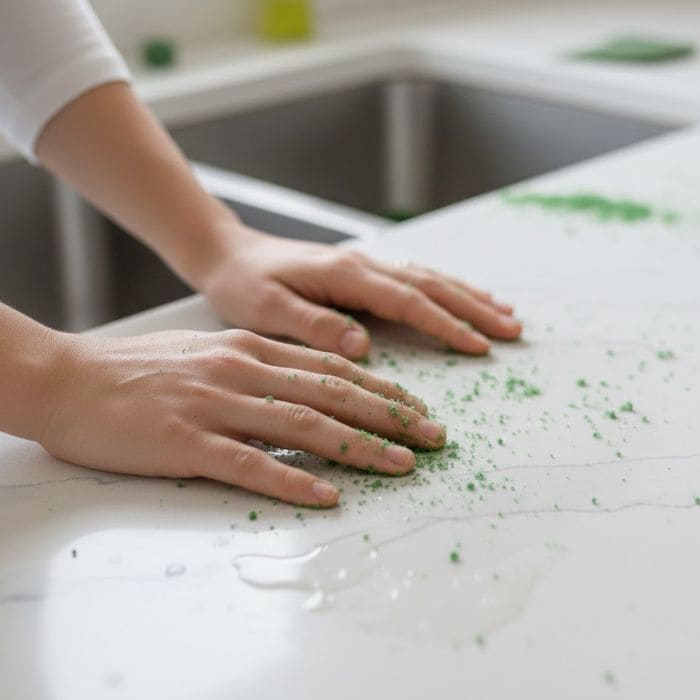
There were also the small annoyances that added up. Foam crumbles easily. Tiny green particles stuck to my hands, the sink, the counter.
No matter how careful I was, I cleaned more than arranging. Once, I noticed specks of foam dust near where my son had been playing on the floor, and that moment stayed with me longer than I expected.
The Environmental Cost I Couldn’t Ignore
Most floral foam is made from phenolic resin, a petroleum-based plastic. It does not biodegrade.
Once it is thrown away, it slowly breaks into microplastics that remain in the environment indefinitely. Those particles can enter soil systems, waterways, and eventually the food chain.
Unlike plastic containers that can sometimes be reused or recycled, floral foam is almost always single-use.
Once it dries out or breaks apart, it becomes waste. Every arrangement made with foam carries an environmental footprint that lasts far longer than the flowers themselves.
When I began reading more about this, I couldn’t unsee it. Each small block seemed harmless on its own, but over time, the impact accumulates.
I imagined how many blocks I had already used and how many more I would go through if I continued without changing my habits.
Using flowers to bring beauty into my home while quietly contributing to long-term environmental harm started to feel like a contradiction.
Thinking About My Son Changed the Way I Looked at Foam
Environmental concerns mattered, but thinking about my son made the issue more immediate.
Floral foam dust is not something meant to be inhaled or touched frequently. It can irritate skin, eyes, and lungs.
Children explore with their hands, and sometimes with their mouths. Even small risks feel unnecessary when there are safer alternatives.
My home is not a studio or a controlled workspace. It is a place where flowers sit near toys, books, and everyday life.
Honestly, I didn’t want material in my house that required constant vigilance.
Choosing Water, Even When It Requires More Attention
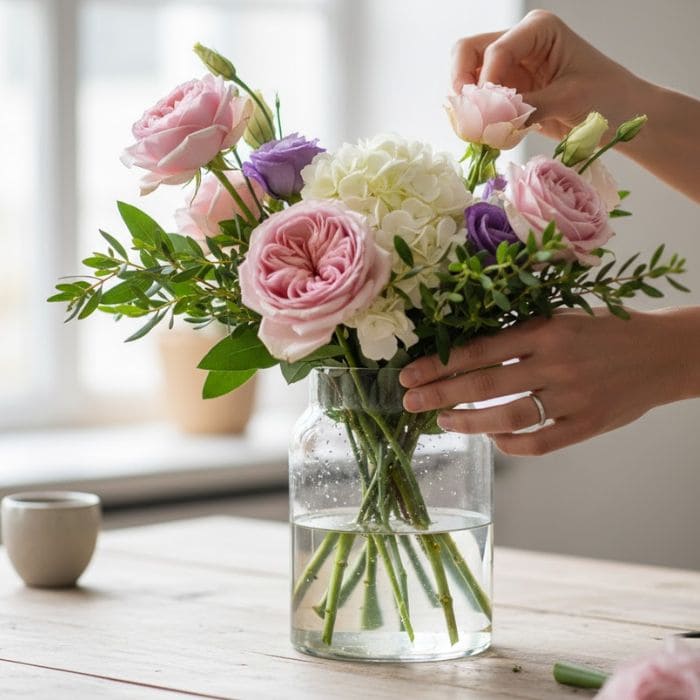
Then, I started choosing water and vases instead of foam. At first, arranging with water is less forgiving as stems shift, and flowers lean.
But that challenge changed the way I worked. Instead of forcing flowers into place, I learned to support them.
Also, I paid more attention to vase shapes, narrow necks to hold stems upright, heavier bases to counterbalance large blooms, taller walls to provide quiet structure.
Additionally, you must change water. You must trim stems. You must notice when something is off.
What Water Taught Me About Letting Go
Arrangements made in water look different. They are softer. Less rigid. Flowers move slightly as days pass. They respond to light and gravity instead of resisting them.
I stopped trying to make flowers behave and started letting them exist. The results felt more honest, more alive.
My arrangements didn’t look professional in the traditional sense, but they looked right for my home.
When I Still Use Floral Foam, Carefully
I won’t say I never use floral foam now. There are occasions when water simply cannot support the structure I need.
On important events or specific designs, I will still reach for foam, but it is rare.
When I do use it, I prepare it properly, clean thoroughly afterward.