My First Vase, My First Attempt
If I am honest, this arrangement was never meant to be shared, it was messy, tentative, and full of second-guessing. But every beginning deserves to be remembered as it was, not as we wish it had been. Today, I am sharing my very first effort at arranging flowers at home, the one that taught me…
If I am honest, this arrangement was never meant to be shared, it was messy, tentative, and full of second-guessing. But every beginning deserves to be remembered as it was, not as we wish it had been.
Today, I am sharing my very first effort at arranging flowers at home, the one that taught me more than any perfect bouquet ever could.
Choosing Flowers Without a Plan
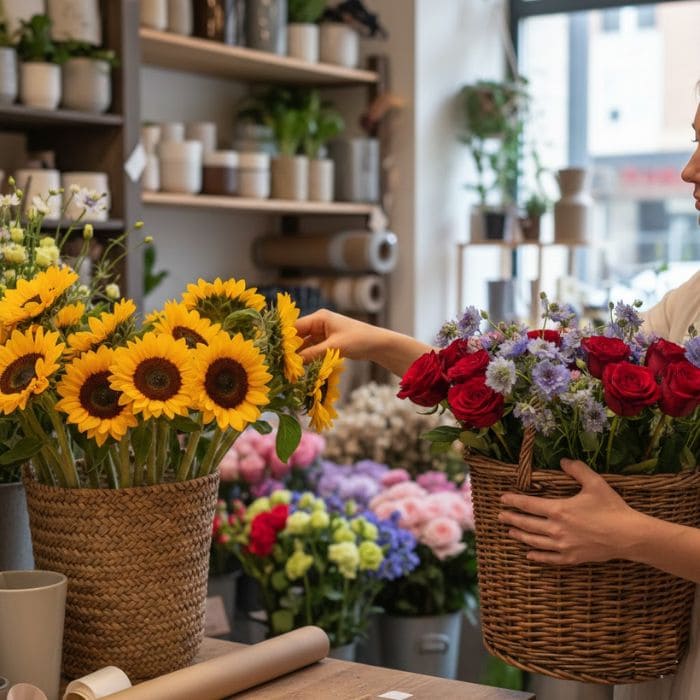
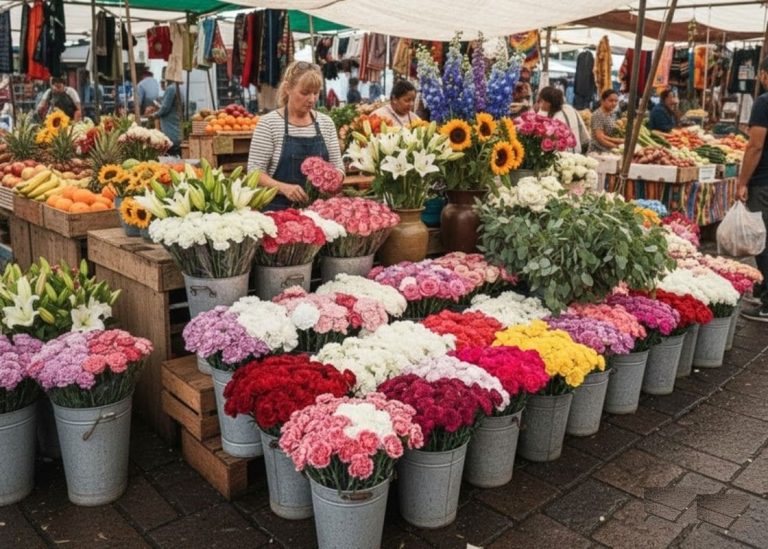
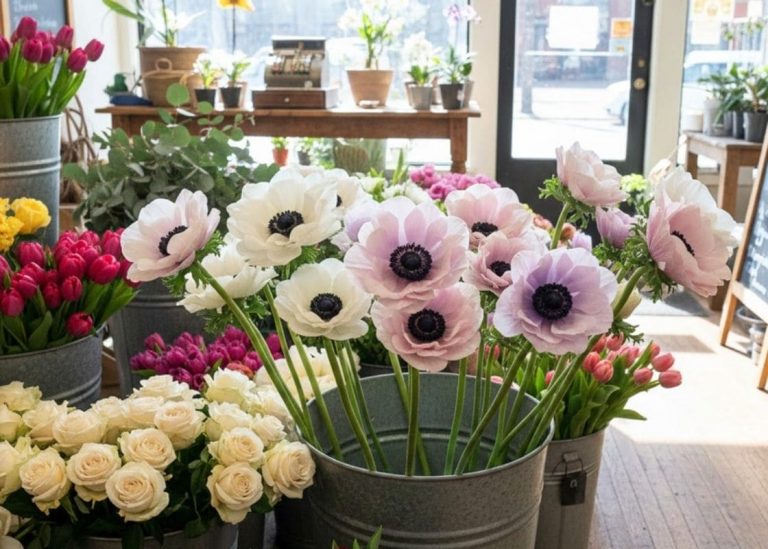
When I walked into Jennifer’s shop that morning, I did not have a clear idea of what suited my house. I was excited, slightly nervous, and ready to try without expecting too much from myself.
I chose sunflowers first, because they felt impossible to overthink. Their faces were open and direct, almost stubbornly cheerful.
Then I added roses, not the dramatic kind, but garden roses with softer petals that felt familiar rather than formal.
Scabiosa followed, mostly because I loved how fragile they looked next to the heavier flowers, and finally eucalyptus, which had already become something I trusted for its scent and structure.
Jennifer did not correct my choices or suggest substitutions. She simply asked where the arrangement would live and nodded when I told her it was for the dining table. “That mix will talk a lot,” she said. “Just make sure you let one voice lead.”
The Vase That Found Me
The hardest part turned out not to be the flowers, but the vase. I had several at home, but none of them felt right. Then something unexpected happened.
A close friend of my husband, visiting from New York City on a business trip, stopped by our house a few days earlier. He travels often, and that week he had just returned from Southeast Asia.

He handed me a wrapped object and said, almost casually, “I picked this up last week and thought it would be perfect for you.”
Inside was an old ceramic vase, clearly handmade, with a slightly uneven rim and a soft, worn glaze. It stood about 28 centimeters tall, with a narrow neck that gently widened toward the base.
The opening was just wide enough to support stems without letting them fall apart. It felt solid in my hands, heavier than it looked, with small imperfections that made it feel lived-in rather than decorative.
I do not believe much in coincidence, but that vase arrived exactly when I needed it.
Setting Up Before Touching a Single Flower
I cleared the dining table and worked in the late afternoon, when the light in our house turns warm and forgiving.
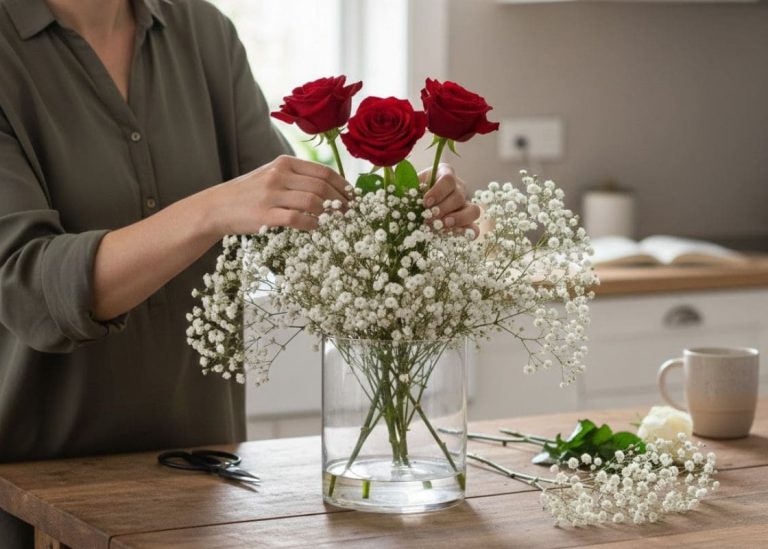
I filled the vase halfway with fresh water and laid the flowers out on the table instead of holding them immediately.
One thing I did instinctively, without knowing it was a rule, was trimming all the stems before arranging. I cut them at an angle and removed leaves that would fall below the water line.
Building the Center First
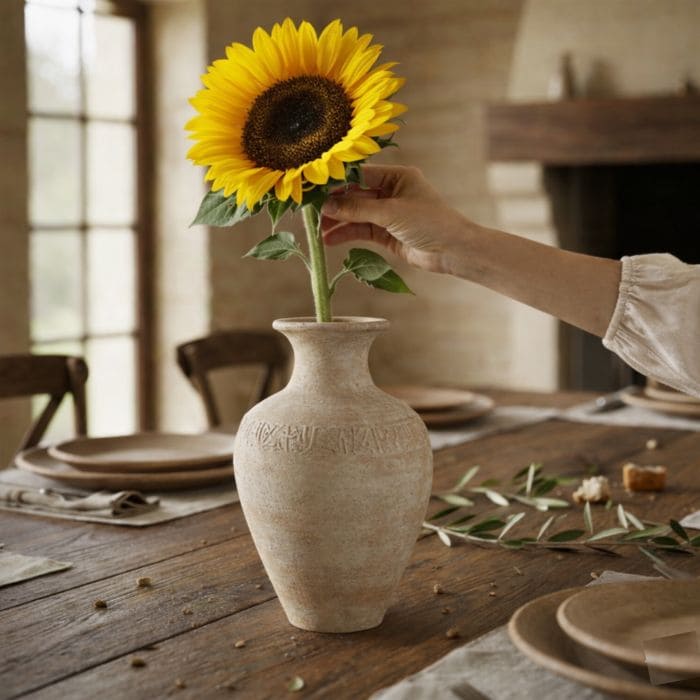
I remembered Jennifer’s words about letting one voice lead. For me, the sunflowers became that voice. I placed the tallest sunflower first, slightly off-center rather than straight in the middle.
This is the first tip I would give any beginner. Do not aim for symmetry. Choose one flower to lead, place it first, and let everything else respond to it.
Letting Supporting Flowers Do Their Job
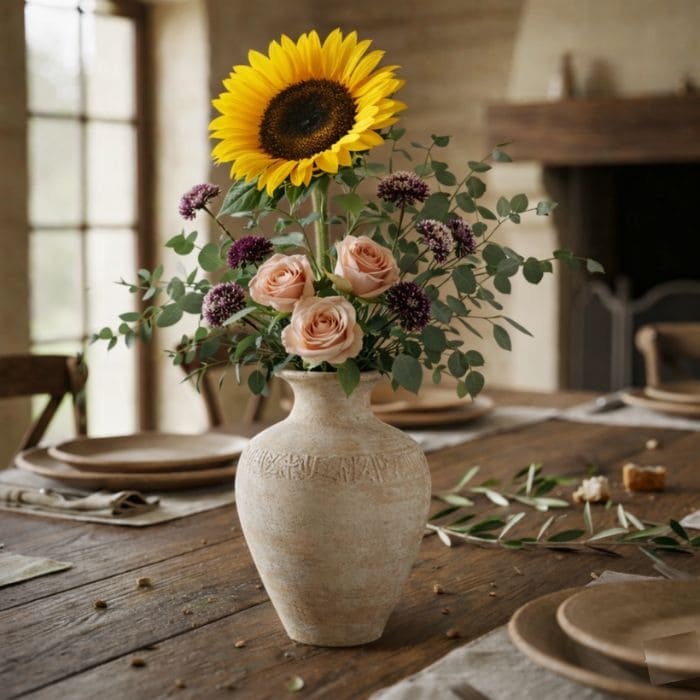
Once the sunflowers were in place, I added the roses. I kept them lower than the sunflowers, allowing them to soften the arrangement rather than compete with it.
The scabiosa came next, filling small gaps and adding movement. I did not force them into place. I let their thin stems bend naturally, which gave the arrangement a relaxed feeling.
Eucalyptus was last. Instead of stuffing it evenly around the vase, I placed it where the arrangement felt too heavy, letting the greenery break up dense areas and extend outward slightly. This helped balance the height and gave the whole piece room to breathe.
Another simple tip I learned in that moment is to step back often. Every few stems, I walked away from the table and looked at the arrangement from across the room. What looks full up close can feel crowded from a distance.
When to Stop
Knowing when to stop was the hardest part. I kept wanting to adjust, to fix, to improve.
Eventually, I noticed that the flowers had started to look restless. That was my signal. I stopped touching them, trimmed one final stem, and left the arrangement alone.
It was not perfect. Some stems leaned more than I expected. One sunflower faced slightly away from the room. But the vase held everything together, grounding the arrangement and giving it a quiet confidence.
What I Would Give Myself as a Mark
If I had to grade that first arrangement, I would give myself a seven out of ten. Not because it was impressive, but because I finished it without giving up or overcorrecting.
That first vase still stays in my memory more clearly than any arrangement I have made since. It marked the moment I stopped waiting to feel ready and started working with what I had in front of me.